Pennsylvania, United States News @ Pegasus InfoCorp
Pegasus InfoCorp helps build customized web software and undertakes web development software solutions for clients internationally. We also build front end websites, and offline software that integrates with our web based software. Our services/ custom built software solutions include Web Development, web development, web software, small business web software development and enterprise scale business software development on web technologies.
(Bloomberg) -- President Donald Trump said it’s “getting to be decision time” on whether he will make a deal with Tehran or resume attacks as Iranian and Houthi threats against Americans in the Middle East continue to grow.
“I have a decision to make: Do I finish it off, which would be very easy to do, or do I make a deal? That’s all,” Trump said in an interview with Fox News’ Sunday Morning Futures. “We don’t play games.”
Trump has suggested that US strikes on Iran could resume after the Nov. 3 midterm elections and he has sent additional forces, including a third aircraft carrier group, toward the Persian Gulf.
Officials warn the period between the election and the new Congress taking office could be particularly dangerous, with a negotiated deal seen as the most likely way to end the conflict.
The US is reducing diplomatic and military staffing in parts of the Middle East amid growing threats from Iran and the Iran-backed Houthi militants in Yemen.
The State Department had initially acknowledged departures only from Saudi Arabia, but an American official told Bloomberg News Friday that staffing changes are taking place more broadly as Iran intensifies attacks on ships near the Strait of Hormuz.
This article originally appeared on Bloomberg at https://finance.yahoo.com/economy/policy/articles/trump-says-decision-time-nears-145705688.html
Attorney General Todd Blanche on Sunday defended the Justice Department's newly filed lawsuit to prevent Alaska state officials from certifying election results if Republican Sen. Dan Sullivan loses in November.
In an at-times contentious interview with CNN’s “State of the Union,” Blanche pointed out that according to the Constitution, Congress can create laws at any time to regulate elections. But when host Dana Bash asked what crime the administration was arguing was being committed, Blanche replied, “It depends.”
“There could be a crime,” said Blanche. “But the real wrong here is that Alaskans are going to be confused and will not have their vote heard. So an Alaskan intends to vote for one candidate, but is confused because of a second candidate with exactly the same name who has voted Democrat his entire life, who donated money to the other Democrat opponent, is running.”
Bash pressed Blanche on how it is illegal for two candidates with the same name to be on a ballot at the same time.
'It is an obligation of the states to avoid confusion, among other things, confusion in the minds of voters in the election process,” Blanche replied. “So the question is whether Alaska, by allowing this to happen, is violating the law and the federal law and the constitution by allowing confusion in the ballot.'
The Alaskan Supreme Court in June ruled that both Sullivans may remain on the ballot as the incumbent faces off in a tight reelection battle with former Democratic Rep. Mary Peltola. The four-person Senate ranked-choice ballot for the general election specifies that Dan S. Sullivan is a 'Registered Republican' and the 'incumbent' — no information is listed after Dan J. Sullivan Jr's name.
Still, it’s unclear how much the court can do about the Justice Department’s lawsuit. With ballots secret, it is virtually impossible for the Justice Department to identify specific voters and clarify which Sullivan candidate they meant to vote for.
Blanche, though, seemed unconcerned about that hurdle.
“There are a number of scenarios where it could be obvious that a voter was confused by the way they wrote down candidates,” said Blanche.
President Donald Trump on Friday said the legal challenge was his idea, though Blanche on Sunday declined to state whether the president had directed him to file the suit.
'I will never talk about any communications I have with the president of the United States,” he said.
Sen. Lisa Murkowski (R-Alaska), who is not up for reelection this year, said Friday that the lawsuit is unnecessary.
“Alaskans don’t need any help voting for their preferred candidates, and the State of Alaska has already handled this by clearly distinguishing the candidates on this year’s ballot,” Murkowski said in a post on X. “The Department of Justice should never have filed this lawsuit.”
Her comments drew the ire of Trump, who on Saturday called Murkowski “Republicans’ Worst Senator, by far,” in a post to Truth Social.
Trump said that Alaska’s ranked choice voting system is “a TOTAL DEMOCRAT SCAM meant to confuse the Voter, so that Senator Dan Sullivan will lose Votes to a man who has never participated in Politics before, named Daniel J. Sullivan, Jr.”
“He is only there because the Democrats want to steal the Election, and Murkowski probably wants that to happen, which is why she is against the DOJ filing a Lawsuit in order to stop this impending crime and tragedy,” Trump added. “I have delivered for Alaska at Historic Levels, nobody has ever seen anything like it, and all I’m asking for is a FAIR AND HONEST SENATORIAL ELECTION! Lisa Murkowski is a DISGRACE to Alaska and our Country. You just don’t get any worse!'
Democratic leaders have also widely condemned the lawsuit, arguing the president is attempting to lay the foundation to overturn the midterm election results if their candidates win critical elections — something Bash asked Blanche about on Sunday.
“One of the big questions is whether or not the president is laying the groundwork for a scenario where, whether it's Alaska or somewhere else, there is, in your words a couple of days ago, a 'doomsday scenario' and we could be in a situation where President Trump tries to overturn the election and the result of that could be, god forbid, what we saw after January 6th,” Bash said.
Blanche quickly fired back: “Oh stop it. You gotta stop it with that. You're not being a real person. You set me up. You're saying, “'Mr. Attorney General, because the president of the United States wants to stop fraud and confusion in Alaska, is he going to do something crazy?' That is not a real question.”
Bash replied that she did not think it was an unfair question, but Blanche argued that the premise of the question was untrue.
“Instead of focusing on how we can address that and how we can remedy that, you're talking about January 6th,” he said. “That's so embarrassing to this network that that's what you're talking about.”
“Oh, come on,” Bash said.
'Don't “oh, come on” me,” replied Blanche. “There's literally confusion.'
It wasn’t the only tense interview Blanche had Sunday.
In an appearance on CBS’ “Face the Nation,” Blanche accused host Margaret Brennan of lying over the wording of the Justice Department’s lawsuit.
“The Alaska Supreme Court did take on this matter,” Brennan began, referring to the court’s June decision.
“No, they didn't. That's a state law,” interrupted Blanche.
“In this country, the states administer the elections. This is how the state came up with the issue and how to handle any confusion,” Brennan said as the Alaskan ballot was shown on the screen.
“You’re not telling the truth,” said Blanche.
Brennan asked why identifying Sullivan as the incumbent is insufficient for the administration.
“Well, listen, I don't know if it's sufficient,” said Blanche. “But I can tell you this: that the director of the Alaska election system has said that it will likely cause confusion.”
Brennan pointed out that the ballots are already circulating, and voting may already be underway, as many vote by mail in Alaska. She then pressed Blanche on Trump claiming responsibility for the lawsuit, to which Blanche reiterated that he will not share his communications with the president.
“The president of the United States said this on camera,” Brennan replied. “He said, 'I told them to do it.' Did he tell that to you?”
“He didn’t say that on camera,” argued Blanche, before adding Trump had been looking at the situation for “months and months and months.” He later added that he had “no idea” who Trump was referring to, and even if he did, he would “most certainly not” talk about it.
Brennan then pivoted to read several lines from DOJ’s lawsuit, including that the suit defined voter confusion as Sen. Sullivan not winning the election and that had all votes cast for Daniel J. Sullivan been cast for the incumbent then he would have won.
As she spoke, Blanche interrupted again.
“That’s not what it says,” he said.
“I’m quoting from it,” Brennan replied, holding up a printed version of the suit. “You are telling them not to certify it. What right does the federal government have telling a state not to certify or how to certify?”
After a moment of crosstalk, Blanche stated: 'If you talk the whole time you're not going to get answers out of me. If you let me answer your question I can address your question.' He then said the suit does not call for officials to avoid certifying the election.
“All we're doing is trying to put guardrails in place so that if that happens there's a system allowed where the ballots are kept in a way so we can determine whether there was confusion,” he explained.
In his interview with CNN, Blanche denied any political motivations were behind the Justice Department’s lawsuit.
“It's important the American people understand that we are not — President Trump is not trying to take over a state election in any way, shape or form,” he said. “What we're trying to do is make it clear that if it is obvious after the election, that confusion led to an improper and illegal result that the Alaskan system should be able to address that.”
In an interview with NBC’s “Meet the Press” on Sunday, Sen. Adam Schiff (D-Calif.) argued the administration has no standing to bring the Alaska lawsuit, and he lambasted Blanche for leading a “disgraceful campaign.”
“This suit has no chance of succeeding,” said Schiff. “But the fact that Todd Blanche and the Justice Department are willing to go along with it, they're willing to put their name on it, is an indication of how far they will go after this election is over to try to challenge the results.”
This article originally appeared on Politico at https://www.politico.com/news/2026/10/25/blanche-alaska-lawsuit-could-be-crime-01134861
Why are major Democrats and Republicans flocking to Mississippi in recent weeks?
In a climate where polls show President Donald Trump's approval ratings cratering, Democrats are unusually optimistic about Scott Colom's chances of flipping the Senate seat held by incumbent Republican Cindy Hyde-Smith -- even in deep-red Mississippi.
'We got to have a senator that looks out for Mississippi, that puts Mississippi farmers first, Mississippi small businesses first, represent our values by not allowing corruption to ruin our country and actually delivers on the commitments to put America first,' Colom told ABC News in an interview earlier this week.
Sarah Warnock/AP Photo - PHOTO: Mississippi Democratic U.S. Senate candidate Scott Colom speaks during a voting rights town hall at the historic Farish Street Baptist Church in Jackson, Miss., Aug. 1, 2026.
The incumbent's campaign dismisses the Democratic push as the last-ditch effort of a campaign that will fall short.
Colom is a district attorney for four counties along the Mississippi-Alabama border and a former nominee to become a U.S. district judge. He would be Mississippi's first Black U.S. senator since Reconstruction.
Democrats have argued that Colom's prominent credentials, as well as voter pushback against Republican incumbents and motivation among Democratic-leaning Black voters, could help boost him. Mississippi's population is around 36% Black, according to U.S. Census data.
Colom faces an uphill battle, as Mississippi has not elected a Democrat to the U.S. Senate since 1982 and voted for Donald Trump in 2024 by around 20 points. ABC News rates the race solid Republican.
But he has gotten the attention of national Democrats; major party figures such as former former Vice President Kamala Harris and Georgia Sen. Raphael Warnock have campaigned with him. Former President Barack Obama also recorded an ad for him released earlier this month.
Harris, during a rally with Colom on Thursday, told attendees, 'I've been in those rooms where there's no cameras, it's senators talking to each other... When you have a voice like his in that room, just think about the impact that's going to have on the decisions coming out of that room. Think about that. This is no ordinary time, and this is no ordinary man.'
AP Photo - PHOTO: Former Vice President Kamala Harris campaigns for candidate Scott Colom in Mississippi, Oct. 22, 2026.
Colom also went viral online last week after a social video he posted showed Hyde-Smith, during a local news interview from February, saying 'You have so many proteins to choose from' while discussing how to deal with higher prices on meat and other goods. In the interview, Hyde-Smith also spoke about working on regulations that would help energy production, and tax incentives to help development.
But it was the proteins part that Colom's campaign seized on, with a punchy video that featured voters mocking the senator's words, with one saying, 'Pick another protein ... I'd rather pick another Senator instead.' (The campaign has confirmed to ABC News that the video has been turned into a campaign ad.)
Sarah Warnock/AP Photo - PHOTO: Mississippi Democratic U.S. Senate candidate Scott Colom listens during a maternal health roundtable at the Capital Club in Jackson, Miss., Aug. 1, 2026.
One concrete sign of confidence among Democrats over Colom's chances came on Tuesday, when the Senate Majority PAC, an outside group aligned with Senate Minority Leader Chuck Schumer, announced it would spend $1.2 million on an ad campaign across broadcast TV and digital for ads for Colom.
Asked what signs the group sees in Mississippi that makes it worth investing in, spokesperson Lauren French wrote, 'Cindy Hyde-Smith has spent a decade in Washington without passing a single piece of legislation, and Mississippians have noticed.'
Hyde-Smith has cosponsored legislation that has passed into law but legislation she initially sponsored or reintroduced has not become law, according to congressional records. Asked to respond to Senate Majority PAC, Hyde-Smith's campaign pointed to how bills from lawmakers 'are often passed as part of larger legislative packages,' and that has been true for some of Hyde-Smith's bills, including the first one she introduced. The campaign also pointed out that she is running for only her second full term.
French said Colom is running a 'disciplined campaign' with messages resonating with voters.
Colom and Hyde-Smith have some history, as she blocked his nomination for federal judge in 2023. She cited his support for transgender rights and having previously been boosted by a George Soros-linked PAC, according to the Mississippi Free Press.
He insists his bid for Senate is not motivated by a desire to get back at her.
'It has nothing to do with the run for me ... as a Christian, I forgive her. It's about the people in Mississippi,' Colom told ABC News.
Hyde-Smith dismissed Colom's chances.
Bill Clark/CQ-Roll Call, Inc via Getty Images - PHOTO: Sen. Cindy Hyde-Smith arrives in the U.S. Capitol for the first vote of the week, September 22, 2026.
'We are confident that Mississippians will once again send Cindy Hyde-Smith back to the U.S. Senate on November 3rd. This is simply Washington insiders making a last ditch effort to give life to Scott Colom's failing campaign,' campaign manager Jake Monssen told ABC News in a statement.
Hyde-Smith's supporters may be more motivated after a boost from President Donald Trump, who's set to hold a rally in Mississippi on Monday as part of a swing of campaign rallies mostly in red states.
The Republican National Committee announced the rally around a week after Colom's social video went viral, although Trump and the group have not indicated why they are doing the rally there and Trump has expressed confidence in Hyde-Smith.
'Cindy Hyde-Smith's very popular ... So if I need to get her over the top, I would go there [to Mississippi]. She's great. Cindy Hyde-Smith is great,' Trump told reporters when asked Thursday about the Senate election.
Hyde-Smith will be attending the rally, according to her campaign.
This article originally appeared on ABC News at https://abcnews.com/Politics/democrats-aim-deep-red-mississippi-senate-seat-scott/story?id=137484924
A man offers residents in Kherson, Ukraine, the use of his Starlink internet after a Russian strike [Reuters]
Ukraine is in desperate need of a new satellite internet service, but a fast and reliable alternative to Elon Musk's Starlink network simply doesn't exist - yet.
Last week's sudden slowdown of the service in Ukraine, which affected Kyiv's ability to defend itself from Russian attacks, has shown how vulnerable the country can be, and sharply increased Europe's urgency to have its own military-grade satellite network.
That vulnerability was highlighted by Musk himself on Saturday, when he accused Ukraine of violating Starlink's terms of service by using it for 'drone strikes to kill people'.
Saying that loophole was closed last week, he wrote on X: 'Violation of those terms will result in end of service.'
He added: 'Were Starlink to be turned off, the Ukrainian front line would collapse immediately'.
There are a few alternatives, but they are all lagging behind Starlink, which is the world's largest satellite constellation.
France's Eutelsat, with its OneWeb internet service, is the main alternative - but it only has about 600 active satellites, compared with Starlink's 10,000-plus.
The EU is working on a new network to rival Starlink, Iris², however it won't be up and running until 2029.
For Ukraine's troops on the ground, several of whom spoke anonymously to the BBC, reliable connectivity is the difference between life and death.
'God forbid they shut it off completely, it would be an absolute catastrophe,' said one. 'I don't give a damn how much an alternative costs when our lives are on the line.'
For now, Ukraine's best bet is to join Govsatcom, the EU's satellite sharing network - but it cannot be used for military warfare like controlling drones.
Watch: Who controls Ukraine's access to Starlink?
Why does Starlink dominate in Ukraine?
Starlink and its military-grade service, Starshield, are both owned by Musk's SpaceX company and have dominated the global satellite market for years.
Ukraine relies on Starlink for communications on the battlefield and Starshield, which is controlled by the US government, for military purposes like drone warfare. The network is able to provide fast, real-time connectivity, which is crucial for defence and intercepting Russian attacks.
'You can't employ drone warfare without this kind of high-speed internet connection,' said Vincent Tourret, a researcher at the French Institute of International Relations.
'Ukraine's defence cannot depend on Trump's or Musk's whims,' French MEP, Christophe Grudler, tweeted.
Who authorised the Starlink restrictions is still not clear, with a confusing blame-game ongoing between the Pentagon, Donald Trump and Musk.
While Starlink has been one of Ukraine's greatest assets in this conflict, the 'flipside of that dependence' has been exposed, explained Kari Bingen, director of the Aerospace Security Project at CSIS.
'This is a critical military capability that Ukraine relies on, but doesn't control.'
Ukrainian soldiers set up a Starlink terminal on the battlefield [Dmytro Smolienko/ Ukrinform/ Getty Images]
Starlink is not the only satellite network Ukraine can access, so if it goes down there are other options - but experts say they aren't as fast, and troops the BBC spoke to agree.
Starlink 'gives us the upper hand when it comes to passing commands - even one or two seconds are critical when we can transfer data and orders faster, and you can really feel that advantage on the battlefield', a soldier said.
The terminals used to connect to the satellites are also an important factor. Starlink's are relatively small and lightweight, so they can be fixed to any kind of vehicle or drone.
Eutelsat's terminals 'are slightly larger, so they can be fitted on the roof of a car, or on tanks, but they can't necessarily sit on small drones', said Eva Berneke, former CEO of the French satellite company.
They are also about five times more expensive, she added.
What can the EU offer right now?
Rhetoric from the White House - like Trump's scathing criticism of Nato and his threats against Greenland - have given the EU 'some pretty brutal alarm bells', Berneke told the BBC.
She had only been at Eutelsat for a month when Russia launched its full-scale invasion of Ukraine in 2022, and said she noticed a marked change in urgency from European authorities, as they looked to her company to help plug holes left by Starlink if it could not be relied upon.
Comments from Musk have further heightened the need for an alternative: 'Be quiet, small man... there is no substitute for Starlink,' he tweeted at Poland's foreign minister last year, when the politician said he would 'look for other suppliers' if SpaceX was unreliable.
Europe has realised its security depends on space, and it must 'strengthen its satellite capacities, urgently', a spokesperson for the European Commission told the BBC.
Right now, it has Govsatcom, a network that was set up in January to share existing satellites between EU member states. Ukraine is not a full-fledged member (although it is trying to become one), but the Commission is in talks with Kyiv to join Govsatcom.
But even if Ukraine could connect tomorrow, the network could not be used for warfare operations like piloting drones, which Starshield is used for.
That could change by the start of next year, however, when the European Commission hopes commercial companies, like Eutelsat's OneWeb, will join the programme. This will give Ukraine some - but not all - of its military network needs.
French President Emmanuel Macron, with a Eutelsat terminal, at the International Paris Air Show last year [Getty Images]
Eva Berneke told the BBC she is confident the company will be able to 'support quite a lot of Ukraine's key military needs'. But meeting its communications needs is another thing because, as is the case with most countries, they are varied and massive.
Eutelsat could not comment on Govsatcom, but told the BBC that 'as the only European operator of a fully operational [Low Earth Orbit] constellation, we are committed to providing resilient connectivity to the businesses, governments and communities we serve'.
No timeline has been given for when Ukraine will be able to join the Govsatcom network. When it does it will likely be as a reliable back-up to Starlink and Starshield.
But that's better than nothing, Vincent Tourret said. 'If Starlink is shut down, it's good to have another way to stay connected, but it won't be enough for strikes or interceptions, at this stage.'
Iris² - The EU's future network
Govsatcom is seen as a short-term safety net, until the stronger and more secure network, Iris² is up and running in 2029.
The ambitious project (pronounced Iris squared) is Europe's answer to Starlink and Starshield. It will be a defence-first programme, the European Commission says, with a focus on governments, military and emergency services. Ukraine has been guaranteed access to it from day one.
Part of the EU's space programme, the European satellite companies Eutelsat, SES and Hispasat are leading the project in a consortium called SpaceRISE.
It will still have far fewer satellites than Starlink, with 348 across low and medium earth orbit - but that shouldn't be seen as a negative, said Kari Bingen.
'Think about a flash light beaming down - those satellites will be able to cover a greater amount of the Earth, so you need fewer of them,' she explained. 'They're all trade offs - I would not take it as a negative, that Iris² is planning for less satellites.'
Tourret was more sceptical: 'It's no gamechanger and no great saviour, I'm afraid'.
A SpaceX Falcon 9 rocket carrying 56 Starlink satellites takes off from Cape Canaveral in March 2023 [Paul Hennessy/ Getty Images]
A highly produced video on the EU Space Policy's website declares: 'With Iris², Europe will no longer depend on others for satellite connectivity.'
So does that mean Ukraine could switch off Starlink? No - that wouldn't be a good idea.
'Users need to think about communications resilience,' Bingen said. 'So if something happens to one system, you have other ways to maintain connectivity.'
It's similar to how mobile phones work, explained Eva Berneke: 'If you don't have 5G, you go back to 4G. And if you don't have 4G, you might use 3G, so you have multiple networks for resilience. It's the same idea in warfare.'
But while a phone might not load pictures as quickly on 3G, for a drone operator, it can be deadly: 'That is not a nice situation to have to be in when you're fighting a war.'
Iris² is not the only option. This week, Finnish companies Nokia and ICEYE announced they would look at developing satellite communications for Ukraine's military defences.
And a joint venture between European satellite makers Airbus, Leonardo and Thales, called Project Bromo, is hoped to be another competitor against SpaceX, but it is still in the very early phases.
Space projects take a long time, Berneke said, and need 'a lot of money'.
Designing the programme, making the satellites, launching them and then having enough of them in orbit for full coverage takes many years.
'Even if you gave me €8bn right now, I don't think I could have anything up there before 2032-2033,' she explained.
Why Space is the new defence frontier
Military work in Space is nothing new, and has been happening since the dawn of the space age in the 1950s. But the conflict in Ukraine has shown how integral it is to modern warfare.
'Communication is so important, and terrestrial communication platforms, whether it's 5G or fibre, can be attacked on the ground,' Berneke said. 'It is a lot harder to shoot down an entire satellite network. That's not something any military can do right now.'
While we look to the skies, however, most of the world's communications are travelling via undersea cables - about 99% in fact. But these are vulnerable to attack - this week the UK government outlined new measures to protect its cables, after an increase in suspicious activity by Russian vessels.
'In a crisis or conflict, there are serious concerns that undersea cables will be cut... so if that happens it's good to have satellite communication as a backup,' Kari Bingen said.
This article originally appeared on BBC at https://www.bbc.com/news/articles/c65yn97xe7ypo?xtor=AL-72-%5Bpartner%5D-%5Byahoo.north.america%5D-%5Bheadline%5D-%5Bnews%5D-%5Bbizdev%5D-%5Bisapi%5D
Images by the Press Team of Maria Corina Machado team on Sunday shows the opposition leader arriving at Santa Rosa church in Barquisimeto, Venezuela. After more than 10 months in exile, Venezuelan opposition leader and Nobel laureate returned home to a political landscape that has been reshaped by her ally the United States without her involvement. - Maria Corina Machado Press Team
After more than 10 months in exile, Venezuelan opposition leader and Nobel laureate María Corina Machado has returned home to a political landscape that has been reshaped by her ally the United States without her involvement.
“I am here. With you,” Machado announced on X Sunday morning shortly before other members of the opposition confirmed her arrival without providing details.
Former opposition presidential candidate Edmundo González Urrutia, who is currently in exile, celebrated her return, saying, “Today is a very important day for Venezuelans. Our sovereign voice returns with her to lead and guide this process!” He added that he will soon join her in returning to the country.
The opposition shared images of Machado on Sunday in Lara state being greeted by supporters at the Church of Santa Rosa.
US President Donald Trump said he didn’t know about her return but that he hoped she was safe.
“I don’t know anything about it, but I think she’s a very nice woman,” Trump said when CNN’s Julia Benbrook asked about Machado’s whereabouts. “She gave me her Nobel Prize, so how can I say anything else? And I hope she’s safe.”
Machadoleft Venezuela in December for Norway to accept the Nobel Peace Prize, which she was awarded for promoting democratic rights in her country.
unknown content item
-
A month after she left, the US toppled her rival, strongman President Nicolás Maduro, and began working with the acting Venezuelan government to steer the country toward a democratic transition and political reconciliation. The process has involved several high-profile opposition figures but has excluded Machado and González Urrutia.
Dinorah Figuera, who has been leading the opposition bloc’s negotiations with the government, said Machado’s return was a result of Maduro’s ouster and the ongoing reconciliation talks.
US Secretary of State Marco Rubio echoed those remarks and added: “The United States expects the freedoms of all sectors of Venezuelan politics to continue to be respected. Likewise, we expect all political actors to support these talks which represent the best chance Venezuela has had in thirty years to peacefully achieve not just a free and fair election but an enduring democracy.”
Machado had repeatedly vowed to return home and hinted that she would run for president again if an election were held.
In late August, a key member of her inner circle, Omar González, returned to the country after almost three years in exile, in what he called a “prelude” to Machado’s own arrival.
Machado had attempted to re-enter Venezuela seven times over the past few months without success, according to her advisers.
She first tried in late June to help with reconstruction efforts after two powerful earthquakes devastated the country, but claimed the government thwarted her return by closing its airspace.
She tried again in late September while acting Venezuelan President Delcy Rodríguez was in New York for the United Nations General Assembly, but she was denied entry three times in a single day.
Rubio said on September 1 that Washington had concerns about her possible return but that she did not need the United States’ approval.
“María Corina Machado, a Venezuelan citizen, has every right to enter her country whenever she wants to return. We have given her advice. For example, during the earthquake, we had many concerns and will continue to have concerns in the future, but we want her safety to be guaranteed,” he said at the time.
While away from home for more than 10 months, Machado traveled the world to rally political support from her allies, including Trump, to whom she gifted her Nobel Prize.
Machado arrives at the US Capitol to meet senators after her meeting with Trump on January 15, 2026. - Elizabeth Frantz/Reuters
While the Trump administration has shown support for Machado in the past, it has largely sidelined her from Venezuela’s ongoing political transition.
After ousting Maduro in January, Trump called Machado a “very nice woman,” but claimed she “does not have the support or the respect within the country” to be leader.
Instead, the US has been working with Maduro’s successor, Delcy Rodríguez, to enact political and economic reforms in the country. Rodríguez has met just about every demand from the Trump administration, including releasing hundreds of political prisoners and making it easier for US companies to invest in the country.
In late August, Trump announced that the US had reached an agreement to take majority control of more than 65 billion barrels of proven oil reserves in Venezuela, a move some consider beneficial for both the US oil industry and the Venezuelan economy. Machado in a video statement questioned why the oil agreement announced by Trump was being signed by the Venezuelan government, which she called an “illegitimate regime.”
The government clung to power in 2024 after state-controlled electoral authorities declared Maduro the winner of the last presidential election, despite experts concluding that such a result was statistically improbable.
Rodríguez vowed at the UN General Assembly last month that Venezuela would hold new elections and transition to a full democracy, which the US says is the main goal, but the acting government has yet to announce when a vote will take place.
Trump has repeatedly said the country is not ready for elections yet but has insisted that a lot of progress has been made.
CNN’s Logan Schiciano and Julia Benbrook contributed to this report.
For more CNN news and newsletters create an account at CNN.com
This article originally appeared on CNN at https://www.cnn.com/2026/10/25/americas/machado-returns-venezuela-latam-intl
McALLEN, Texas (AP) — The Ford Expedition rumbled to a stop and Cindy Banda’s bedazzled flip-flops landed on the asphalt of the Houston cancer center’s vast parking lot. She threaded through the rows of cars, a tally of patients who gather here to sit with chemotherapy needles or lie on radiation machines.
The elevator dinged open. A year ago in this building, surgeons removed Banda’s right breast, and she still didn't know whether treatment had expunged the cancer from her body. Doctors had told her it would be tough to beat.
“I’m more of a positive person myself,” Banda said, now sitting with a white wristband in a dim waiting room. But the bills are harder to dismiss, and the single mother with six children in her care repeated something like a mantra. “Keep the house. Keep the cars. And just keep the kids stable.”
That’s true for many Americans, as rising healthcare costs leave more families with a sinking feeling after seeing the bill for surgery or medication. Heading into the Nov. 3 midterm elections, about half of registered voters said healthcare costs are a major problem for them and their families, up from a little more than one-third four years ago, according to a Fox News poll from September.
Banda knows how that feels. She backed Trump in each of his three campaigns, motivated by her opposition to abortion. But when cancer came, the ensuing scramble to make ends meet was painful enough to rearrange her priorities, and she started to think about voting Democratic for the first time.
The 46-year-old was ushered into a sterile room for her appointment, her phone lit up with a text. “Please contact TD Auto Finance.”
“This one’s $1,300,” she said of the car payment bill. “I have to go back to work.”
She had been on sick leave from her job selling internet service for one year, and she needed the income to support her three kids and three more she had taken in after her sister's death.
The doctor said her reconstruction surgery could be scheduled early next year. “I was hoping for maybe December,” Banda said, “only because I've met my deductibles.” Come January, she would have to pay down the $7,500 again. Earlier may be possible, the doctor replied, if the skin around her surgical scar loosens.
The evening had cooled slightly by the time she walked back through the rows of parked cars, their ebb and flow marking the tide of sickness, survival and death in a small corner of a colossal healthcare industry that saves lives while taking in over $5 trillion every year.
Banda paid $8 for parking as she left.
Confronting death and debt in America before a midterm election
Two weeks later, Banda was back at work, making door-to-door rounds to sell Spectrum's Wi-Fi in McAllen, her city along the U.S.-Mexico border in the Rio Grande Valley. Banda, holding blue flyers, walked along a row of storefronts, some that shuttered since she last was in the area.
She hadn't had a sale and commission since October of last year, after the biopsy and diagnosis.
The doctor who gave her the news had hugged Banda, and she sobbed even though she never really sobs in front of other people. During chemo, her children took turns buzzing off her wispy hair. When her 9-year-old daughter's hand quivered, a teenage cousin helped guide the clipper over her mother’s scalp.
Banda’s first impulse was to maintain normalcy, stability, for the children.
But that requires roughly $7,000 a month for utilities, mortgage, car payments and groceries, along with the two water leaks. Then, even with insurance through her job, the surgeries, chemo and radiation added up to over $25,000 that she's been paying off, making Banda one of tens of millions of other people in the United States in medical debt.
Banda tries not to dwell on death and debt.
“It’ll consume you,” she says. She smothers those thoughts beneath her bubbly demeanor and avoids being alone. But that truce, between her insistence on positivity and the fears that it covers, is brittle.
Certain thoughts still arrive uninvited. Banda’s late sister, Melissa, didn’t have life insurance. Banda makes sure it's a payment she never misses.
“Sometimes I think, and I shouldn’t think like this, but I’m worth more gone than here,” she said one day. “Obviously, the goal is not that, the goal is to beat it,” she continued, “to keep the house and keep the cars.”
So far she has, with the help of others.
On top of child support, the father of Banda's 9-year-old often pays $400 a week for a nanny to help with the kids. Banda’s own father sent her $700 before for her recent Houston appointment, one of his many cash infusions. Her high school classmates, who she hadn’t been in close touch with in decades, fundraised by selling grilled chicken, rice and beans from a roadside tent. Two GoFundMe fundraisers raised nearly $30,000 and Banda rented her late sister’s house while putting her own in forbearance.
But months of insecurity takes its own, sleepless toll. She needed to sell some internet services to catch up.
After sticking the Spectrum Wi-Fi flyers onto empty storefronts, she drove to pick up her kids from school. The following day she had a morning meeting at a barbershop for what would be her first sale back at work.
Turning on Trump and voting Democratic for the first time
A lifelong Christian, Banda had voted her anti-abortion stance in past elections. When her sister was kidnapped and murdered by her ex-husband in 2020, Banda retreated from religion. The cancer brought her back to church with an apology to God, but it also made her rethink her politics.
She voted for Trump in 2016, and his first four years seemed steady, so she voted for him again in 2020. Democratic President Joe Biden's tenure, including the tail end of a global pandemic and rising inflation, felt like bedlam, so she voted for Trump to return to the White House in 2024.
But two years later and fighting an expensive disease, she had found no respite from high prices.
So when James Talarico, a Presbyterian seminary student running for U.S. Senate as a Democrat, visited one of Banda’s fundraisers — speaking about his diabetes and his work in the Texas Statehouse to lower the price of insulin — it moved her. “Imagine if he can do that for the cancer,” she said.
Talarico and his Republican opponent, state Attorney General Ken Paxton, have different approaches to healthcare. Talarico wants all Americans to be able to join Medicare; Paxton proposed a $25,000 tax deduction for out-of-pocket medical expenses.
Talarico also supports a law guaranteeing abortion access nationwide, which Banda has voted against for years. But after she slid into debt to stay alive, after her grocery bills mounted and the high school had to comp the kids' soccer gear she couldn't afford, Banda’s anti-abortion concerns have been superseded by costs.
“Because it’s what I’m living,” she said. “I'm living it.'
Banda cast an early ballot for Talarico. “Never voted Democrat before today!!” she wrote in a text with blue heart emoji.
Her news will come on Election Day, in a doctor's office
Banda had just started a new cancer-targeting medication that cost $16,000 a month, reduced to $500 by insurance. By the afternoon, she was nauseous and fatigued, unable to eat. The malaise would keep her home the next day. She would miss the meeting with the barbershop to close her first deal since getting sick, though she felt confident it was in the bag.
But Banda pushed through the discomfort one evening to join her family as they replaced the flowers at her sister's tomb.
She drove past the headstones and oak trees in the evening’s slanting light, and the family gathered around Melissa Banda's tomb in an open-air mausoleum. There was no speech. Their eulogy was her father, Fidel Banda, methodically clipping and arranging the flowers for his daughter.
Banda walked along the wall of tombs. She will find out on Election Day whether the cancer is in remission or whether it's spread to her organs.
“This one’s for me,” she said, pointing to a blank tomb next to her sister's.
“Mom!” said her daughter with the huffiness of a 9-year-old. “Why would you say that?”
Banda smiled and added, “in a hundred years.'
This article originally appeared on Associated Press at https://www.yahoo.com/news/us/articles/she-voted-trump-every-time-123400184.html
Dustin Johnson and other players are considering whether to continue with LIV Golf.
ASSOCIATED PRESS
One way or another, LIV Golf is in its final days as originally created. The tour began life as a PGA Tour breakaway funded by Saudi Arabia's virtually limitless Public Investment Fund, but now is working to both line up financing and hold onto players in preparation for what league officials have termed 'LIV 2.0.' With a self-imposed go/no-go deadline nearing, several recent developments have complicated plans for a new version of the league.
For players, LIV's chief drawing card was the paychecks with astounding numbers of zeroes. Stars, former stars and non-stars alike all cashed in during LIV's run, earning many millions more than they would have been able to on the PGA Tour or the Europe-based DP World Tour. But when Saudi Arabia cut off funding for LIV in April, the pipeline for those paychecks dried up, and now player after player has decided to take their chances elsewhere.
The most notable defection came several weeks ago, when Jon Rahm decided he'd had enough of LIV. Rahm's jump to LIV in late 2023 was a seismic moment in golf history, a declaration that the league was capable of enticing even one of the world's best players. But after three years of absolute domination on LIV and underperformance in majors, Rahm opted to walk away from millions — perhaps even tens of millions — owed to him under his initial contract. Rahm's future plans aren't yet known, but the fact that he was willing to forgo the remainder of his contract is a stark statement on his belief in LIV 2.0.
Several other notable players have followed Rahm out the door. In recent days, Ian Poulter announced he would be ending his LIV tenure, expressing gratitude on X for the opportunity:
Rahm's Legion XIII teammate Tyrrell Hatton also announced he wouldn't be playing in LIV 2.0. Like Rahm, his next event will be the DP World Tour's Abu Dhabi Aldar Championship in early November. Major winners Sergio Garcia and Louis Oosthuizen, among many others, have declared that they intend to pursue other opportunities outside LIV Golf.
The defection of so many notable players — in name if not necessarily in current skill — makes the challenge of bringing LIV Golf 2.0 to light that much more difficult. Professional golf on an international scale is a star-driven system, and having notable names in the field is the fastest way to draw attention to an event.
Accordingly, LIV's new investor, BC Partners Credit, had set a deadline of Sunday, Oct. 25, for players to commit to the league, though BC has the ability to move that deadline. LIV's own attorneys have suggested in recent bankruptcy hearings that the league would make a decision on its future existence by the end of this month.
Several players aren't simply walking away from LIV, however; they're seeking what they claim they're still owed. On Sunday, The Athletic reported that more than 10 players, led by Masters champions Dustin Johnson and Bubba Watson, are seeking more favorable severance deals from the Public Investment Fund. The unpaid terms of their contracts reportedly total more than $100 million.
Johnson's attorney David Cornwell suggested that the players are reluctant to sign on with LIV 2.0 until the remaining obligations of LIV 1.0 reach a satisfactory conclusion. The Athletic reported that the PIF had offered the players two cents on the dollar for the remainder of those contracts, and Cornwell indicated that the PIF's decision to cut off funding for LIV ought to give other sports entities pause.
'The PIF was an honorable business partner until what we regard as its abandonment of LIV golfers,' Cornwell told The Athletic. 'Professional sports leagues and their player unions in the United States, along with sports organizations worldwide, should take notice: the PIF's treatment of LIV golfers may signal how it will treat professional athletes in other sports. How you do one thing is usually how you do everything.'
At the same time, court documents indicated that many LIV executives were paid hundreds of thousands or even millions of dollars in retention payments and bonuses prior to the league's bankruptcy filing this summer. While retention payments aren't uncommon during bankruptcy proceedings, the fact that LIV was paying significant amounts to executives while vendors went unpaid raised questions and opened up the league to external criticism.
LIV and BC Partners have developed a plan that could bring in up to $300 million in financing for LIV 2.0, and players would hold a majority ownership stake in the new entity. However, as of the deadline date of Sunday only four players — Richard Bland, Ben Campbell, Brendan Steele and Cameron Tringale — had formally committed to the next iteration of the league. Bryson DeChambeau, a free agent who has been linked to the LIV restructuring in the last few months, has not formally committed to the next version of the league just yet.
This article originally appeared on Yahoo Sports at https://sports.yahoo.com/golf/article/as-liv-golf-deadline-nears-players-are-departing-demanding-payment-171817228.html
A US marine has been indicted in Okinawa prefecture in Japan on charges of robbing and murdering a Japanese woman.
Lance corporal Devin Jacob Ballard, 20, was accused of killing Anna Yagi, 39, in a hotel in the prefecture’s capital Naha and taking her wallet and backpack earlier this month. Ballard denied the allegations.
Ballard, who was stationed at Futenma Air Base, was found walking alone in Okinawa city later that day and was arrested the following day on suspicion of robbery and murder.
He was indicted on Sunday amid growing anger among Okinawa residents over the incident and the presence of US military installations.
He allegedly strangled the woman with the cord of a telephone in a hotel room between 2.10 and 4.15am on 3 October and stole her backpack that contained her wallet and other belongings, according to the indictment.
The woman had checked into the hotel with a man around 2.10am that day. Hotel employees entered the room at 4.15am after she did not check out on time. The staff found her body and alerted the police, investigative sources told the Japan Times.
Ballard, pictured leaving a police station, denies the allegations (Reuters)
Investigators later checked the security footage that showed a man with tattoos on both arms and a backpack leading the hotel, the report said. The backpack was found near the hotel.
Under Japanese law, conviction can carry the death penalty or life imprisonment.
The incident involving a foreign national prompted Okinawa governor Genta Koja to step up calls for the central government to take preventive measures.
Local residents have long voiced anger over crimes committed by US military personnel, including offences against women and girls, as well as noise and pollution associated with American military installations.
Following his arrest, the US military in Okinawa imposed a 30-day curfew on 9 October, restricting personnel from leaving their bases between midnight and 5 am.
It was after the Japanese government lodged a strong protest with the US government over the incident.
Prime minister Sanae Takaichi condemned the incident as a “brutal and heinous” crime and called for stricter discipline of American personnel.
People watch the flight line near a poster showing the different kinds of aircraft next to Kadena Air Base in Kadena, Okinawa prefecture (AFP/Getty)
The incident renewed long-standing local tensions over the heavy US military presence on Okinawa, which hosts a large share of US bases in Japan.
Crimes involving US military personnel stationed in Japan, including murder, rape, and robbery, have long been a source of public concern.
In Okinawa, local police handled over 100 criminal cases involving US personnel in 2025 alone, according to an official from the prefecture.
In 2016, a former Marine and Kadena base civilian worker Kenneth Gadson was sentenced to life in prison for raping and murdering a 20-year-old woman.
The rape of a 12-year-old Okinawan girl by three US servicemen in 1995 sparked widespread protests.
This article originally appeared on The Independent at https://www.independent.co.uk/asia/japan/us-marine-indicted-okinawa-robbery-murder-b3072916.html
The midterm campaign is being fought in areas President Donald Trump carried in the last election, and largely among voters who have supported him in the past but have soured on his presidency.
Rick Sebring, a resident of rural Black Creek, Georgia, is one of them. He was among the Americans drawn to Trump when he emerged as a political outsider running for president in 2015, and supported him in each election since.
Now, he says, he jokes with his son and daughter, 25 and 18, that he needs a hat that reads: 'I fell for it three times.'
Trump is 'not the same guy he was before,' said Sebring, 66, who explained that he no longer believes the president is acting with ordinary Americans' best interests at heart.
'It's kind of like if your wife is screwing the guy next door,' Sebring said. 'You know, you're kind of butt hurt about it.'
He is furious about the war against Iran that Trump started after pledging to avoid new wars in the Middle East. Trump should tell Israeli Prime Minister Benjamin Netanyahu, whom the president endorsed for reelection last week, to 'go to hell,' Sebring said, and 'cut off all aid' to Israel and Ukraine.
He is bothered that Trump tried to stop the release of the Epstein files. He is disappointed that the government-slashing DOGE program, which Trump appointed Elon Musk to run, was ultimately brought to a halt.
Sebring, who responded to the most recent Washington Post-ABC News-Ipsos poll and agreed to a follow-up interview, is part of a small but potentially crucial slice of this year's electorate. About 1 in 5 registered voters who cast ballots for Trump in 2024, 22 percent, now disapprove of the job he's doing. They make up about 8 percent of the electorate.
They're not natural Democratic voters - the vast majority identify as Republicans or independents - but this year, many of them, like Sebring, say they will cast a vote for the opposing party. Republicans have hoped to woo some of them back. If that fails, however, the election could become a Democratic rout, both partisan and nonpartisan analysts say.
The voters who have turned against Trump are a mix of longtime, once-loyal supporters and those who joined his coalition for the first time in 2024. They're more divided than those who cast ballots for Kamala Harris about who should control the next Congress, according to the poll.
Nearly all of the people who voted for Harris in 2024, 99 percent, say they would like to see the next Congress controlled by Democrats 'to act as a check on Trump,' the poll found.
Among voters who sided with Trump in 2024, a large majority do say they would prefer a Republican Congress 'to support Trump's agenda,' but about 1 in 7 say they favor Democratic control.
To date, Sebring has voted for one Democrat in his life - former Alabama governor Don Siegelman, who ran in 1998 on bringing the lottery to the state - but said 'that is going to change in November,' when he plans to vote for Sen. Jon Ossoff (D-Georgia).
Others say they'll split their ticket or stay home.
Carrie Bacon, a 73-year-old retired nurse in Belfast, Maine, voted for Trump in the past because she didn't want to see his Democratic challengers win the presidency. Now, she refers to him as 'the bozo that's currently in the White House,' saying he's 'after his own aggrandizement and making as much money on the side as he can.'
Bacon, who responded to a Washington Post-Schar School poll of her state, said she will vote for Sen. Susan Collins (R-Maine) because the longtime incumbent has shown she can act independently of her party. But she will not support the Republican running in her congressional district, former Maine governor Paul LePage.
Russell Clements, a 61-year-old retiree and three-time Trump voter from Gloucester, Virginia, who responded to a Post-Schar School poll in his state, said he soured on the president after watching how he handled the Iran war. Even so, Clements said that if he could go back to 2024, he would still not vote for the Democrat.
He isn't sure that he'll vote in this year's midterm elections, and he suspects that if Democrats take back Congress, they'll prioritize impeaching Trump over legislating.
'I don't see where that serves any purpose,' Clements said. 'He's going to be gone in two years anyway.'
Jill Vandermolen, a 56-year-old teacher in Menomonee Falls, Wisconsin, who responded to the Post-ABC News-Ipsos poll, said she voted for Trump three times as the lesser of two evils and because she had family members who were excited about his reputation as a businessman.
She, too, says she may not vote this year.
'Everything costs more money,' she said. As for Trump, she said that she does 'not have faith in him at all.'
The poll found that 76 percent of Trump voters nationwide who still approve of the president's performance either were certain to vote or have already done so. By contrast, among Trump voters who now disapprove of him, just 53 percent said they are either certain to vote or already have.
Historically, one of the strongest predictors of how a person will vote in midterm elections is their approval or disapproval of the president's job performance. That's because midterm elections typically act as a referendum on the party in the White House.
The challenge for Republicans is that Trump's approval, which was already low earlier this year, has continued to drop as the midterm elections approach. His approval was 39 percent among registered voters in the Post poll in February, 37 percent in July and 33 percent in the current survey.
That decline, which has been seen in many other surveys as well, has largely come among Republicans and Republican-leaning independents. Nearly all Democrats already disapproved of him. Trump's approval rating is significantly lower than it was during the midterm election of his first term, in 2018, when Democrats made sizable gains. His standing rivals the lows set by Presidents Harry S. Truman in 1946 and George W. Bush in 2006, whose parties suffered major defeats.
Not all Trump voters who have soured on him are going to punish Republicans in the midterms, however, seeing the Democrats as a worse option. Efforts to motivate those voters by highlighting issues on which they dislike Democrats have been at the core of Trump's campaign rallies all month.
Amy Reese, 42, of Victoria, Virginia, said she has 'never seen the economy this bad, ever, and it's scary.' She has supported Trump in each election - and would again - but more recently has been horrified when she sees him on TV, 'and he's like, 'Oh, the economy is so good.''
Last month, her family's electric bill was almost $700. The cost she's paying each month for insulin as a Type 1 diabetic has more then doubled. Her husband drives for a living selling wholesale to convenience stores, and if Trump doesn't do something quickly about gas prices, 'he is going to put a lot of small-business owners out of business, my husband one of them,' she said.
Trump's promised $5,000 checks if Republicans win the elections 'aren't enough' to make up for the hardship people have faced this year, and besides, Reese said, those checks would never get approved by Congress.
But Reese will vote Republican in the midterms, she says, explaining that she 'will never vote for a Democrat,' primarily because she opposes abortion.
Dana Bessen, 76, of Highland, Michigan, also voted for Trump three times, despite not having a high opinion of him. The retired engineering technician disapproves of most everything the president has done during his second term, particularly his trade policy.
Bessen said, however, that he'll still vote for Republicans in the midterms.
'They're not Trump,' he said.
Post Polling Director Scott Clement contributed to this report.
Related Content
This article originally appeared on Washington Post at https://www.yahoo.com/news/politics/articles/trump-voters-changed-minds-key-125044843.html
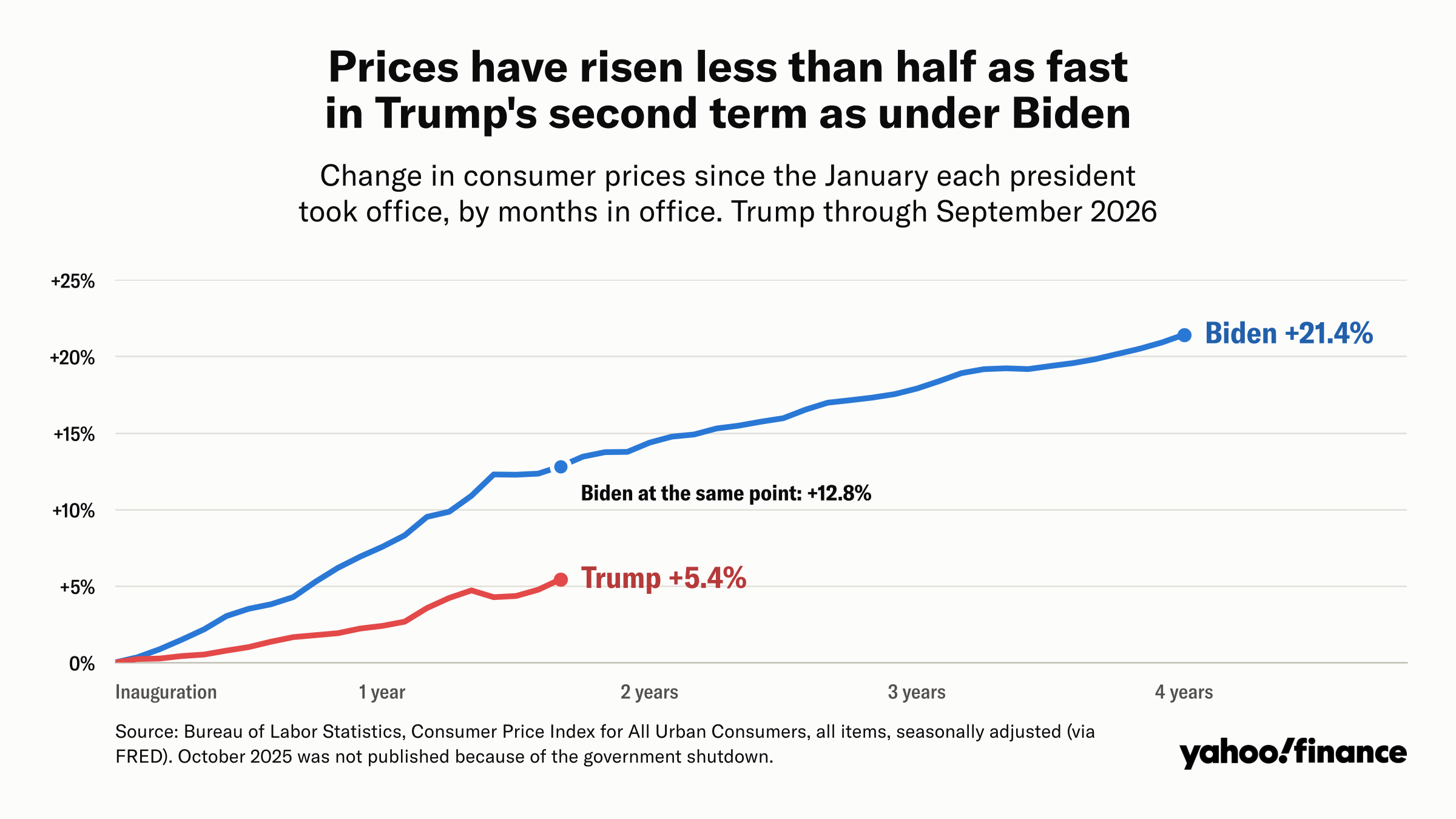
So far in President Trump's second term, prices in the US have risen only about half as quickly compared to his predecessor's four years in office. Yet Trump has a 72% disapproval rating on the issue and risks paying a steep political price — just as former President Joe Biden did — with voters drawing a direct connection between rising prices and the president's policies.
In the last election cycle, prices of all items rose more than 20% during Biden's term, sparking widespread voter angst. This time around, price growth is notably slower, rising 5.4% in a little less than two years since Inauguration Day.
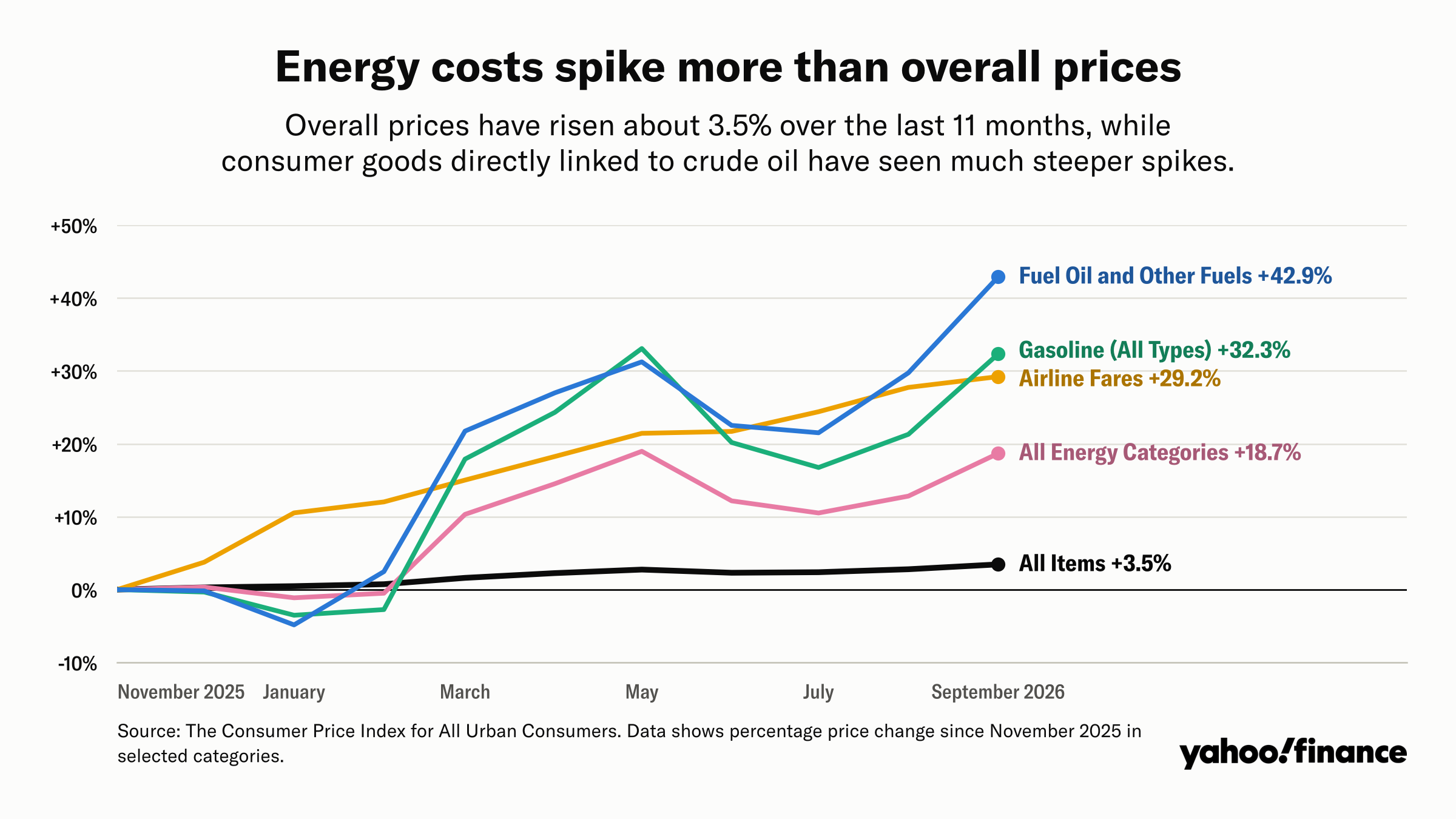
But a Yahoo Finance analysis of price data shows that a few major outliers have hit Americans' wallets in an outsized way, largely due to increases in goods affected by the war in Iran and tariffs.
Fuel oil and gasoline are perhaps the most dramatic examples, spiking over 30% beginning in March in response to the war in Iran and the closing of the Strait of Hormuz.
And voters have noticed, as evidenced in poll after poll. A New York Times/Siena poll released this week found 73% of likely voters disapprove of the president's handling of gas prices.
Trump underscored the salience of energy prices when he posted a charge this week that 'Iran is doing everything they can to drive up the price of Oil prior to the US Midterm Election.'
Trump has often pushed back against questions about high energy prices, saying they won't be a problem once the Iran war ends.
The connection between price increases and Trump's tariff policy has also been in evidence.
Coffee prices have risen nearly 23% during Trump's second term (more than double the rate under Biden) as tariffs raised prices before Trump scrapped many of the coffee duties late last year in response to coffee drinkers' unhappiness.
Goods like toys and footwear have likewise risen rapidly as importers from China and elsewhere in Asia faced new tariffs. Toys are a particularly stark example, falling by 4.6% during Biden's term and then rising by 7.8% so far in Trump's term.
'Maybe the children will have two dolls instead of 30 dolls, and maybe the two dolls will cost a couple of bucks more than they would normally,' Trump said in a rare acknowledgment of tariff-fueled price increases when he was pressed on the issue in April.
Other goods have moved in the opposite direction. Eggs jumped by an average of 2.57% each month when Biden was in the White House, but have dropped 3.82% each month of Trump's term so far, the analysis shows.
But tariffs remain in focus and unpopular, with an average of polls from the Silver Bulletin finding that 62.7% of Americans disapprove of how Trump has handled trade and tariffs versus 32.8% who approve.
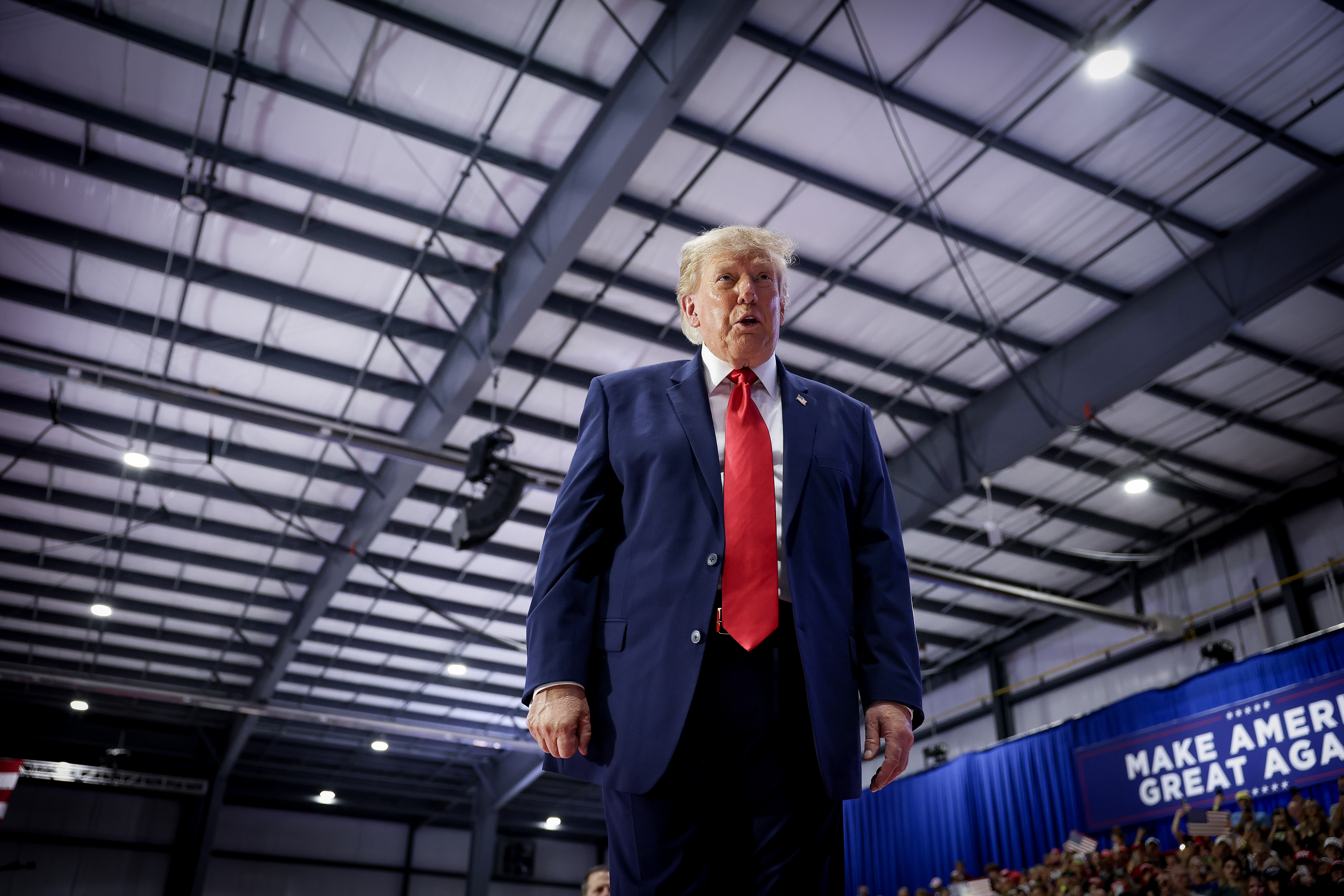
President Donald Trump is seen after a rally on October 22 in Sioux City, Iowa.. (Anna Moneymaker/Getty Images)
Anna Moneymaker via Getty Images
Gas in focus in the final weeks of the campaign
Despite the different roots, inflation has emerged as the central political problem for Trump and his party — as it was for Biden and Democrats — and comes as early voting is already underway for the Nov. 3 midterms.
And perhaps no individual price tag is more politically charged, for any president, than the cost of a gallon of gas.
Trump is trying to make his case as gas prices are averaging about $4.30 per gallon and diesel is elevated after setting an all-time price record last month, according to the American Automobile Association (AAA).
Yet he faces the inconvenient fact that his record on gas prices is now all but indistinguishable from Biden's.
Since Jan. 20, 2025, prices have averaged $3.449 per gallon according to data from the Energy Information Administration. Under Biden, the average price was $3.455 per gallon over his four years.
Trump spent much of the last campaign promising the opposite, pledging $ 2 per gallon gasoline and vanishing inflation in nearly every 2024 campaign speech.
That is leading voters to blame the president for the state of affairs.
As Ipsos also put it this week in a summary of recent findings: 'Americans' confidence in the economy has been bad since the Iran war began [and] now the bottom has dropped out.'
Ben Werschkul is a Washington correspondent for Yahoo Finance.
This article originally appeared on Yahoo Finance at https://finance.yahoo.com/economy/policy/article/inflation-under-trump-is-only-about-half-the-rate-under-biden-voters-are-still-just-as-mad-120043933.html
At least 12 people were injured, including six children, amid a Saturday evening shooting in Tallahassee, near the campus of Florida A&M University, officials said.
Eleven of those who were injured had gunshot wounds, Tallahassee Chief of Police Lawrence Revell told reporters during a late-night press conference.
'Six are adults and six are juveniles,' he said. 'We know our youngest victim is 11 years old. At least three of our victims have sustained serious injuries and one of those is in critical condition. Eight of those are reported to be in stable condition.'
WTXL - PHOTO: Police investigate a shooting near the campus of Florida A&M University, October 24, 2026, that left 12 people injured.
The person who was injured but not from a gunshot was 'a grandmother of one of the victims,' the chief said, adding that she 'injured herself fleeing from the scene.'
In an update Sunday morning, the Tallahassee Police Department (TPD) said that six of the victims remain hospitalized, one of whom is in critical condition. Five other victims have been released from the hospital, police said.
No arrests had been announced as of Sunday morning. Police said they are working to identify those responsible for the shooting and sought the public's help, asking anyone with information about the shooting to contact investigators immediately. Police also asked that anyone with photos or video share them with investigators.
'We will determine what happened, identify those responsible, and get answers for all of the victims, their families and everyone impacted by this tragedy,” Revell said in a statement released on Sunday. “We know there are people who saw something, heard something or may have video that could help us piece together exactly what happened.
WTXL - PHOTO: Police crime scene tape at the scene of a shooting, October 24, 2026, near the campus of Florida A&M University that left 12 people injured.
'We need our community's help. No detail is too small, and no piece of information should go unreported,' Revell added. 'If you know something, please share it with our detectives. Your information could be the key to holding those responsible accountable.'
Police described the shooting as an 'altercation [that] occurred between individuals' near the intersection of Perry and Manatee streets, which is just outside Florida A&M University's Bragg Memorial Stadium.
'The University is aware of an incident that occurred near campus on Perry Street on the evening of October 24,' the school said in a statement. 'The Tallahassee Police Department is on the scene and actively investigating the situation.'
This article originally appeared on Good Morning America at https://abcnews.com/US/12-injured-including-6-children-shooting-florida-university/story?id=137549623
By Bo Erickson, David Shepardson and Rachel More
PERRY, Georgia/BERLIN, Oct 25 (Reuters) - The head of German automaker Audi defended on Sunday the company's planned $4 billion investment in a new US plant, announced by President Donald Trump as he campaigns for the November midterm elections.
Audi Chief Executive Gernot Doellner stood alongside Trump at a rally in Perry, near Macon in central Georgia on Saturday, as the US president said Audi, part of the Volkswagen Group, planned to build an assembly plant in Georgia that will produce 200,000 SUVs annually.
'This decision was preceded by many months of careful planning and intense negotiations,' Doellner told reporters on Sunday. 'If the American president invites you, you accept the invitation. That is what respect for the office and for the country in which we invest demands.'
A final decision on the investment will have to be taken by Volkswagen's supervisory board for it to go ahead.
Georgia has competitive election races for the US Senate and its governor and Trump is eager to make the case that his auto tariffs are helping the US economy and boosting US manufacture.
In Germany, the tariffs have added to the pressures on European industry and tension between Volkswagen management and workers, who face job cuts and possible plant closures.
Trump's tariffs on autos, steel, aluminum and parts cost Audi around €1.2 billion ($1.4 billion) last year as it imports all its vehicles for the US market from Europe or Mexico, Audi has said.
Critics of the tariffs say they have also been damaging in the US where they have increased vehicle prices and delayed some automaker investments.
A spokesperson for Germany's IG Metall union said the decision by Doellner to extend a hand to Trump during the election was 'hard to understand'.
'Trump has never failed to make it clear what he is after: he wants to weaken our domestic economy, particularly the automotive sector,' the spokesperson said.
Christiane Benner, head of the IG Metall union and Volkswagen's deputy supervisory board chair, said it was 'right and necessary' to improve the company's position on the US market with a new plant. 'However, firm prospects for workers at all sites, particularly those here in Germany, must be clearly defined and set out,' she said.
Doellner declined to give full details on the investment deal with the US, including whether it involves tariff relief for the company.
AN OPPORTUNITY IF GERMAN WORKERS BENEFIT
Olaf Lies, state premier of the German state of Lower Saxony, Volkswagen's second-largest shareholder, said that expanded production in the US was an opportunity provided German workers also benefit.
'Growth in America must secure jobs and value creation here and must not displace them,' he said.
Audi said the investment will create approximately 4,500 jobs. Construction is scheduled to begin next year, with production starting in the early 2030s, Audi said.
The plant is expected to assemble the Audi Q7, Q8 and Q9 SUVs, a US official told Reuters.
Audi also plans to build 25,000 vehicles a year in neighboring South Carolina, the official said. Some of the vehicles, now built in Europe, would be exported, the official added.
Those vehicles will be assembled at a $2 billion plant of VW's off-road brand Scout Motors that is under construction in Blythewood, near the state capital, Columbia, the official said.
'We regard the region as a key market for profitable growth,' Volkswagen CEO Oliver Blume said. 'A potential Audi plant in the US would create further conditions for this.'
A gold Audi with manufacturer licence plates was parked outside Trump's rally on Saturday.
(Reporting by Bo Erickson in Perry and David Shepardson in Washington; Additional reporting by Christoph Steitz and Rachel More; Editing by Nia Williams, Rod Nickel, David Goodman and Barbara Lewis)
This article originally appeared on Reuters at https://ca.finance.yahoo.com/news/trump-set-announce-plan-audi-213133434.html
Mike Rogers and Abdul El-Sayed, the respective Republican and Democratic candidates in Michigan's crucial Senate race, sparred over tariffs, the Supreme Court, health care and a range of other issues in a contentious debate Wednesday night.
Both candidates are jockeying for an edge in a tight matchup that's likely to play a significant role in deciding which party controls the upper chamber of Congress after the midterms. According to forecasters, Michigan may be the GOP's best opportunity to flip a blue Senate seat on Nov. 3, which could prove critical to maintaining its slim majority as Democrats target GOP incumbents in a number of red states across the country.
Michigan hasn’t elected a Republican to the Senate in more than three decades, but Rogers came extremely close to ending that streak two years ago, and polls suggest he may have another chance this time around.
Throughout the campaign, El-Sayed has garnered far more attention because of his progressive policy positions, a very competitive Democratic primary and the novelty of his emergence onto the national political stage. But Rogers is far from an also-ran. He has managed to keep this race tight at the same time as some other swing-stateRepublican candidates have lagged well behind their Democratic opponents.
Here’s a guide to who Mike Rogers is, what he stands for and how strong his chances of turning Michigan’s Senate seat red appear to be.
Who is Mike Rogers?
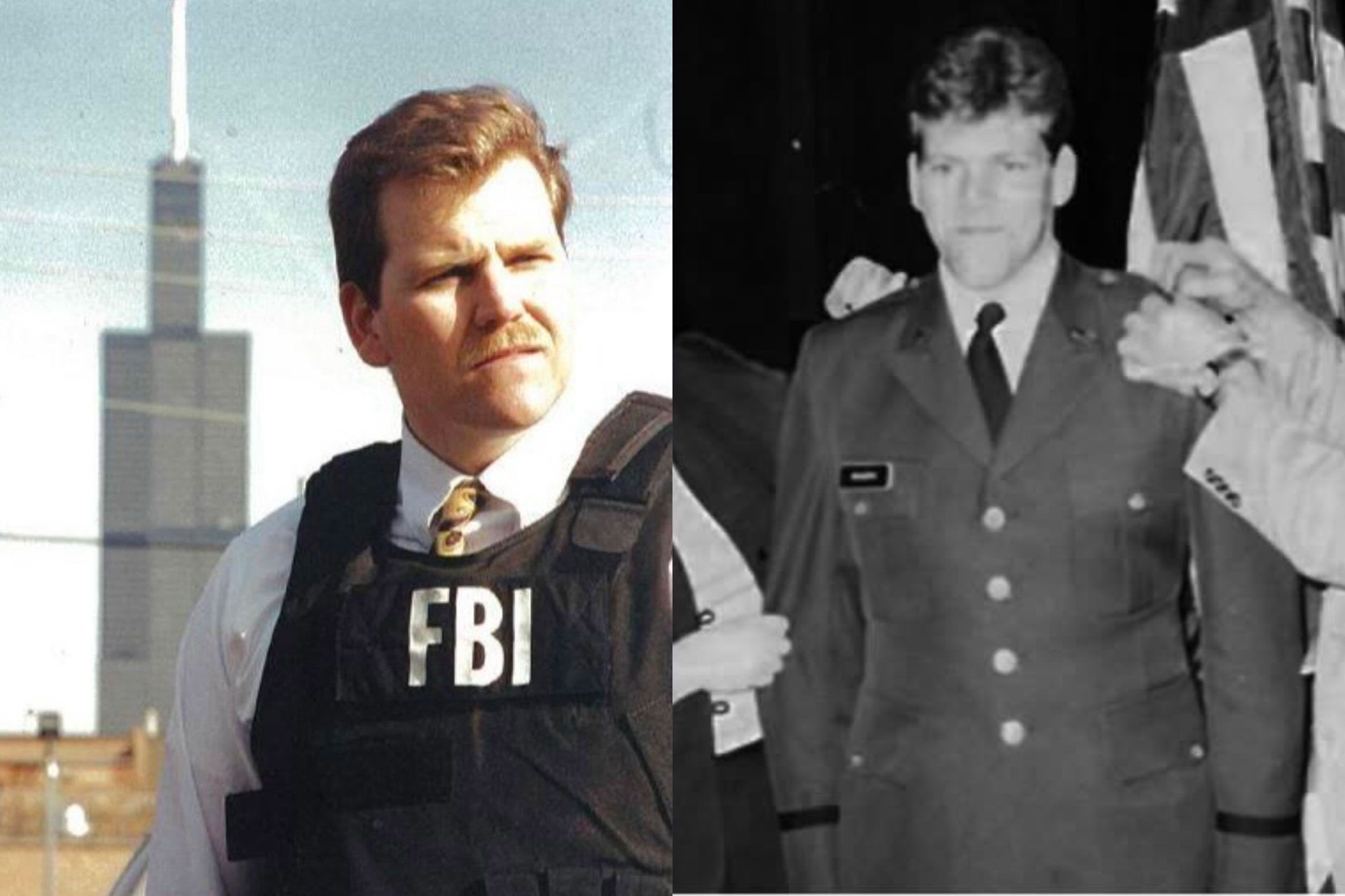
Rogers was born in Livingston County, Mich., in 1963. His father was a teacher and vice principal. His mother led the local chamber of commerce. He earned a bachelor’s degree in criminal justice and sociology from Adrian College in 1985 before joining the Army.
After four years of military service, Rogers joined the FBI as a special agent based in Chicago. His work with federal law enforcement focused on countering organized crime and public corruption. Rogers began his political career in 1994, when he was elected to a seat in the Michigan state legislature. He served for six years before launching his first bid for Congress.
Mike Rogers during his time serving in the FBI and the Army.
Photo illustration: Yahoo News; photos: Mike Rogers/Facebook
Rogers was elected to the House of Representatives in one of the closest races of the 2000 election cycle, defeating Democrat Dianne Byrum by just 111 votes. During his 14-year tenure in the House, Rogers was a key conservative voice on national security and intelligence issues. He spent four years as chairman of the powerful House Intelligence Committee, much of that time focused on what he describes as “the economic and national security danger posed by China.”
He was the primary sponsor of several bills centered on honoring public servants that ultimately became law, including legislation making it a crime to protest outside a fallen military member’s funeral at federal cemeteries and a bill that provided relocation assistance to families of federal law enforcement officers who die during their service.
Rogers left Congress in 2015 and quickly began a career in media. He hosted a daily syndicated radio show called Something to Think About with Mike Rogers and worked as a commentator for CNN. He also had high-ranking roles in several tech and security companies during this period.
He returned to politics in 2024, when he ran for an open Senate seat in Michigan. Once again, Rogers was involved in one of the nation’s tightest races, but this time he was on the wrong side. He was defeated by Democrat Elissa Slotkin by just 19,000 votes, losing by a margin of 0.34 percentage points.
Roughly six months after that loss, Rogers announced his plan to run for the Senate again in 2026. After his early entry into the race, no other significant candidate joined the Republican primary, allowing him to run unopposed.
Rogers has been married to his wife Kristi, a longtime executive in the security industry, since 2010. He has two adult children from a previous marriage.
What does Rogers stand for?
Rogers is a conservative Republican on most issues.
He is personally opposed to abortion, but has said he would vote against a national abortion ban if he were in the Senate, arguing that the issue should be left up to the states. He has been a longtime proponent of strict immigration laws and accused El-Sayed of advocating for “open borders.”
While in Congress, he voted in favor of a proposed constitutional amendment banning same-sex marriage nationwide and opposed the repeal of the military’s “don’t ask, don’t tell” policy toward LGBTQ service members, though he said more recently that his views on LGBTQ rights have “evolved” over time. Like many Republicans this midterm cycle, he has come out strongly in opposition to transgender athletes participating in girls’ and women’s sports.
Rogers’s opinion on President Trump has shifted through the years. After the 2020 presidential election, he denounced Trump’s efforts to overturn the results.
“Refusing to recognize state-certified elections without evidence of fraud is an abdication of the higher responsibility to our Constitution,” he wrote in an op-ed for the Washington Post published the day before the Jan. 6 assault on the U.S. Capitol.
In 2022, he said he did not support the president’s ambition to run for a second term, saying, “Trump’s time has passed.”
During his two Senate campaigns, however, Rogers has spoken more favorably of the president, including echoing some of his unsubstantiated claims about widespread fraud in Michigan’s elections. Despite Rogers’s past criticisms, Trump has endorsedhim in both races.
In the later stages of this year’s campaign, Rogers has broken from Trump on two key issues: tariffs and the war in Iran. Over the past few weeks, Rogers has pulled back from his early support for Trump on both topics — calling for Trump to end the “tariff war” with Canada and saying the conflict in Iran should “end quickly.”
What are his chances?
Since the primary, polls have, on average, shown El-Sayed with a modest lead of about 3 percentage points, a small enough advantage to suggest that the race could go either way — particularly if polls are once again underestimating Republicans’ support as they have in some other recent elections.
The Cook Political Report, one of the nation’s most respected election forecasters, lists the contest between Rogers and El-Sayed as a toss-up. Another highly regarded forecaster, the Center for Politics, classifies the race as “leans Democrat.”
This article originally appeared on Yahoo News at https://www.yahoo.com/news/politics/article/who-is-mike-rogers-meet-the-republican-trying-to-end-the-gops-30-year-senate-drought-in-michigan-221717241.html
To know more about how we can meet your specific requirements, please drop us a message or mail us at 'contact [at] pegasusinfocorp.com'. Please click here to drop us a message.