Colorado Springs, United States News @ Pegasus InfoCorp
Pegasus InfoCorp helps build customized web software and undertakes web development software solutions for clients internationally. We also build front end websites, and offline software that integrates with our web based software. Our services/ custom built software solutions include Web Development, web development, web software, small business web software development and enterprise scale business software development on web technologies.
A sign points toward voting stations inside the Arroyo Seco Regional Branch Library in Los Angeles. (Ronaldo Bolanos / Los Angeles Times)
A federal judge in a blistering opinion Wednesday denied a Trump administration request to immediately block California elections officials from counting the ballots of 20,000 voters whose citizenship the administration questions. The administration swiftly said it would appeal.
U.S. District Judge David O. Carter ruled that the administration’s allegations were “not credible” and that the intervention it sought would violate a host of federal laws, sow chaos in the ongoing midterm election, likely lead to the disenfranchisement of legitimate voters and foster future political meddling in elections.
“This request violates longstanding constitutional principles mandating that states have control over their elections,” Carter wrote. “If [the Trump administration’s] last-minute request for relief were granted, either party could create chaos for their own political purposes to disrupt the election process.”
Carter, an appointee of President Clinton, wrote that never in American history “has the federal government, on the eve of an election, sought to coerce a state and local government to abandon their own Constitutional elections procedures and bend to the will of the Executive Branch,” and that, in bringing its suit, the Trump administration was asking the court to “believe that it reigns as a sole sovereign.”
“But California and its people are sovereign, too,” Carter wrote.
Carter’s ruling was the second to deny the Trump administration a temporary restraining order against the state and Los Angeles County this week, after a three-judge panel of the U.S. 9th Circuit Court of Appeals denied the government’s emergency request in a separate order Monday.
Carter ruled after a 3½-hour hearing Tuesday, where a slew of attorneys for the state, county and independent voting rights groups argued against the administration’s demands.
First Assistant U.S. Atty. Bill Essayli — who is the top federal prosecutor in L.A. and argued for the Trump administration at Tuesday’s hearing — wrote on X that his office had already filed notice of appeal and “will immediately seek an emergency order” reversing Carter back in the 9th Circuit.
“Every day, more ballots are processed by election officials. This ongoing emergency disenfranchises American citizens through dilution,” Essayli wrote.
State elections officials — including Secretary of State Shirley Weber and Los Angeles County Registrar-Recorder/County Clerk Dean Logan, whom the Trump administration sued along with the state — did not immediately respond to requests for comment. However, other state leaders, voting rights advocates and election experts cheered the ruling.
“For the second day this week, our country’s legal system is standing up to the President’s authoritarian attempts to remain in power unchecked and unchallenged,” Gov. Gavin Newsom said.
“Today’s ruling is yet another important victory for the rule of law and the right to vote,” said California Atty. Gen. Rob Bonta. “But this fight is not over. We will keep fighting to protect California’s elections from unlawful federal interference and get this baseless lawsuit dismissed.”
Anna Baldwin, the director of voting rights litigation at Campaign Legal Center who argued before Carter on behalf of the NAACP and the League of United Latin American Citizens, said Carter had “affirmed what the Constitution has already made clear: The states and Congress oversee our elections, not the White House and not the Department of Justice.”
Rick Hasen, director of the Safeguarding Democracy Project at UCLA School of Law, said Carter’s ruling was as sweeping a rejection of the Trump administration’s illegitimate attempts to interfere in California’s election as could possibly be written.
“The federal government lost in every way it could possibly lose. It lost on the law, and it lost on the facts, and it lost on the equities — [or] weighing the harms to the various parties,” Hasen said.
And that is appropriate given that the case was a “total overreach of federal power,” Hasen said. “The Constitution’s clear that states have the authority to run Congressional elections unless Congress passes a statute otherwise — and Congress didn’t do so here.”
The Trump administration sued California, Weber and Logan on Oct. 15 — three months after Homeland Security Secretary Markwayne Mullin wrote a letter to Weber alleging that there may be more than 190,000 noncitizens registered to vote in California, and two days after acting Deputy Atty. Gen. Trent McCotter wrote again to Weber and Logan, giving them 48 hours to set aside the ballots for the 20,000 voters on the latest list.
Much of the debate since has centered on the origins and evidence in support of that list.
California and L.A. County officials have said the list appears to be inaccurate, with Logan’s office saying its review of a subset of about 200 voters found that a substantial portion appeared to have been born in the U.S. — a claim that has been disputed by Homeland Security officials.
Elections officials from several other California counties have also raised concerns about the accuracy of smaller lists of voters derived from the 20,000 that were sent to them by Justice Department officials last week, along with a warning that they could face criminal penalties if they tabulate those votes. Officials have said the lists they received contained the names of individuals who did not appear to live in their counties or did not appear to be registered.
State officials have pointed to similar lists being rejected as inaccurate elsewhere, including in Nevada. And during Tuesday’s hearing, multiple attorneys for voter advocacy groups — including the NAACP and Mi Familia en Acción — challenged both the origins and the reliability of the Trump administration’s data, and questioned why the Trump administration has so far refused to disclose when and from whom it obtained the purchased California voter roll data it says its analysis is based on.
State and county officials have said that complying with the Trump administration’s demands would badly disrupt the election and could disenfranchise legitimate voters who are wrongly included on its inaccurate list.
Justice Department officials have defended the list, saying it is composed of 20,000 individuals whom the administration has “high confidence” are not citizens, and that that number represents the “floor” to the issue — while the earlier, 190,000-strong list was the “ceiling” and also included people the administration had suspected but had less confidence were noncitizens.
They argued that Carter should immediately bar the state and county from tabulating ballots from the flagged voters until they can prove those voters are citizens — in part because, as soon as cast ballots are received in person or removed from their envelopes, they cannot be resegregated.
Essayli has said federal authorities have “overwhelming evidence” to support their claims. At Tuesday’s hearing, he said once federal authorities obtained the purchased voter registration records from the state, they “had to enrich or enhance or add, supplement, information to the voter file, so they took the info that was on there — names, addresses — and they used a database that’s often used by law enforcement, it’s used commercially.”
However, in sworn court filings, other administration officials have acknowledged “discrepancies” with some of the records and noted that more recent reviews of the data did show some people on the list appear to have citizenship claims. Essayli told Carter, “We’re never going to stand here and tell you that everything is 100%.”
In his ruling Wednesday, Carter also focused in part on the reliability of the list, noting that the process by which the Trump administration compiled it, and the reliability of outside databases to build it, remained unclear and could not be determined to be reliable based on the record before the court — particularly given that administration lists elsewhere have been shown to be unreliable.
But Carter also touched on several other weaknesses he saw in the Trump administration’s case — weaknesses that were also hit on by the 9th Circuit panel that rejected the administration’s request Monday.
Among them, Carter found that the request violates federal law precluding altering of election rules on the eve of an election.
Carter wrote that prosecutors like Essayli can prosecute individuals who illegally vote — which he called a “clear remedy” to the administration’s concerns about illegal voters casting ballots — but that the administration’s demands to force the state and county to set aside 20,000 ballots at once “would wreak havoc and disrupt the election that is already underway, create a chilling effect on election workers and voters alike, and discount the votes of United States citizens.”
“The Executive Branch cannot replace the remedy Congress carefully enacted with its own unlawful and unconstitutional solution instead,” Carter wrote.
“Eroded trust in our democracy is irreparable. Once a vote is segregated, lasting harm has occurred. If the Executive can discount votes and threaten an ongoing election due to unproven allegations, then our democracy is in danger,” he wrote. “This Court declines to be a party to such process.”
Carter also denounced the Justice Department’s letters to county elections officials threatening them with criminal penalties if they don’t comply with its demands to set the ballots aside — writing that “these threats must stop.”
An appeal, if one is filed by the Trump administration, would face a “tough road ahead,” Hasen said.
While not guaranteed, the appeal is likely to be taken back up by the same three-judge appellate panel who previously heard — and rejected — the administration’s emergency request to block state officials from counting the ballots.
That panel — composed of two appointees of President Trump and one of President Biden — denied the previous request narrowly, ruling 2 to 1 that it did not have jurisdiction over the matter because Carter had not had a chance to rule in the lower court. However, both judges in the majority — Mark J. Bennett, one of the Trump appointees, and Judge Gabriel P. Sanchez, the Biden appointee — wrote separately from the court decision to make clear that they would have denied the administration’s request on the merits too.
Among other things, they wrote that the U.S. Constitution gives power over elections to the states and Congress, not the executive branch, and that federal law precludes such voting probes so close to an election.
This article originally appeared on LA Times at https://www.yahoo.com/news/politics/articles/judge-denies-feds-request-block-005308566.html
US immigration agents often work with their faces covered and do not wear identification. [Reuters]
Details of more than 41,000 personnel working for the US Department of Homeland Security (DHS), including thousands involved in immigration enforcement, have been leaked to the public.
The leak includes names, work addresses and phone numbers of DHS staff, including agents working with Immigration and Customs Enforcement (ICE) and Customs and Border Protection, along with descriptions of the work they do for each agency.
Wednesday's leak marks the third time in recent weeks that a government agency has been targeted by leaks or hacks.
A DHS spokesperson said the agency is 'aware of a potential breach and is actively working to address the situation swiftly and effectively.'
'We take all security threats against our employees and officers seriously and will work to ensure all are properly protected,' the spokesperson added.
'We will update the public when more information is available.'
The seemingly unprecedented breach of employee information was made public online. A group called the Department of Peace accessed the information from DHS, while journalist and cybersecurity researcher maia crimew alongside the website Distributed Denial of Secrets put it online.
The information was put in a database named Icepick.
Most of the agents included, more than 21,000 of them, work for CBP, according to the data. Nearly 6,600 work for ICE.
Other records show agents with Homeland Security Investigations, the Federal Protective Service and even people working for the Cybersecurity and Infrastructure Security Agency.
The leaked information also included dozens of previously unknown operation names, the agents that led and worked on those operations, and some of the technology they used in their work, including tech provided by Cellbrite and Palantir.
The groups wrote in an online statement that the the leak was not meant to be a directory of every DHS agent. Rather the aim was to replace 'anonymity with accountability', according to Emma Best, a co founder of DDoSecrets.
'The leak is extraordinary but deceptive in it's simplicity as it identifies the officials responsible for overseeing covert and undercover operations, the government's hunt for leakers and the failed BlueLeaks investigation - along with key personnel in DHS's ever-escalating rendition and deportation programs,' Best added.
BlueLeaks refers to a massive leak of US police data in 2020, data from which DDoSecrets also hosted.
A spokesperson for the Department of Peace pointed directly at actions by ICE agents for the groups work to hack DHS records.
'On July 17th, Markwayne Mullin said he was 'turning up the heat'. This is what happens to ICE when you do that,' the spokesperson wrote on Wednesday.
Mullin in March became Secretary of Homeland Security.
The Department of Peace said it accessed the DHS agent profiles through a single sign-on service called Okta.
Okta is a popular online security tool that organisations use to ensure that only people with access to internal platforms are logging on to them.
A spokeswoman for Okta said the company is aware of the claims being made, but said: 'Okta is secure, and we have no evidence our data or systems were compromised.'
Last month, the FBI was hacked by a group called ShinyHunters, which took personal information about thousands of agents.
In recent days, the Federal Election Commission, which makes public political campaign donation data, was taken offline because of a suspected hacking attempt.
Public backlash to US immigration enforcement has been building as the Trump Administration has pushed a huge increase in arrests and deportations of people suspected of being in the country illegally.
Immigration operations this year have repeatedly turned violent, with ICE agents shooting at more than two dozen people and killing at least nine people.
Those killings include the high profile deaths of Alex Pretti and Renee Good, both of whom were shot and killed by ICE agents this year in Minnesota, despite not being the targets of arrests.
Often, ICE agents carry out enforcement actions while their faces are covered by masks and sunglasses. Immigration agents rarely identify themselves, despite being required by law to do so, and US politicians have publicly demanded DHS enforces the requirement.
Since President Donald Trump returned to office in 2025, the US has enacted nearly 1 million deportations, according to data from the Migration Policy Institute. More than 70% of the deportations have been of people with no criminal record.
This article originally appeared on BBC at https://www.bbc.com/news/articles/cq8jzkpjr28vo?xtor=AL-72-%5Bpartner%5D-%5Byahoo.north.america%5D-%5Bheadline%5D-%5Bnews%5D-%5Bbizdev%5D-%5Bisapi%5D
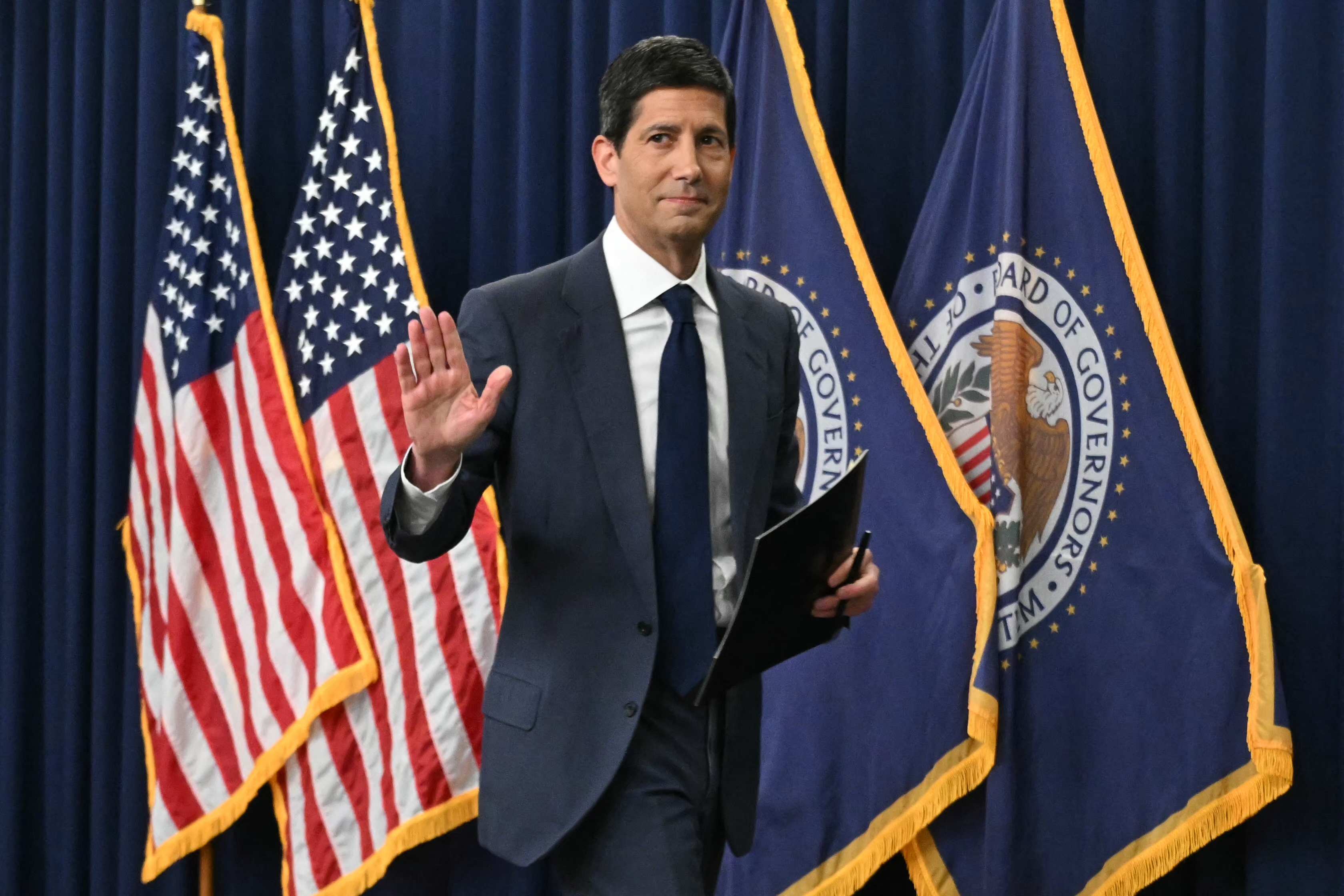
Federal Reserve Chairman Kevin Warsh pushed back Wednesday on any suggestion that next week's midterm elections had a role in the Fed's decision to keep interest rates steady. He also dodged multiple questions on political topics and pressure coming his way from the Oval Office.
But it wasn't for a lack of trying from the assembled reporters.
'I appreciate the question, but I'm not going to be responding to quotes from public officials,' Warsh said during a press conference when presented with criticisms from President Trump that interest rates should be lower and that his colleagues on the Federal Open Market Committee were 'political.'
When the subject turned to the midterm elections, Warsh was similarly curt.
'Politics played no role in the decision,' the chair said, adding, 'I just spent two days with my colleagues upstairs. I didn't hear an utterance about politics.'
He had another political topic to address before it was over when he was asked about a hearing planned for next week of a White House committee investigating allegations against Federal Reserve governor Lisa Cook.
Federal Reserve Chairman Kevin Warsh departs after speaking during a press conference following the Federal Open Market Committee's interest rate decision in Washington on Oct. 28. (Saul Loeb/AFP via Getty Images)
SAUL LOEB via Getty Images
It's the latest twist in the White House effort to remove Cook from the central bank. Warsh was asked if he personally or the Fed as an institution would be involved in those proceedings.
'Not to my knowledge,' he said.
Warsh even seemed wary of weighing in on President Trump's effort to rebrand artificial intelligence (AI) as super intelligence (SI), answering a question on the topic before quickly noting, 'whether you pronounce it AI or SI ... is up to you.'
He defended the central bank's decision to keep interest rates steady less than a week before the midterm elections and maintained that he is determined to get inflation to 2%.
The central bank raised rates in 2022 ahead of midterm voting, which Democrats blasted. The Fed then cut rates in 2024, which then-candidate Donald Trump immediately called'a political move to try and keep somebody in office.'
This time, the central bank held steady. Trump didn't immediately weigh in on the merits of the decision but told reporters on Wednesday afternoon he had not spoken to Warsh about this week's decision.
President Donald Trump leaves the stage after a campaign rally in Lubbock, Texas on Tueday. (Chip Somodevilla/Getty Images)
Chip Somodevilla via Getty Images
Other elected officials, meanwhile, were quick to comment, with a round of finger-pointing from both sides of the aisle after the interest rates were left unchanged.
Republican Ways and Means Committee Chair Jason Smith pointed at the Fed itself.
'It's well past time for interest rates to come down ... I hope the Fed will bring borrowing costs down soon so we can keep building a stronger, brighter future for American families,' Smith said in a statement.
Democrats also said they wanted lower rates but blamed Trump.
Sen. Elizabeth Warren said in a statement, 'Americans deserve lower interest rates and lower costs, but Donald Trump is standing in the way.'
Yet contrary to both sides' wishes, the Fed's next move is expected to be a hike.
The odds in the CME FedWatch Tool, which calculates how traders view upcoming Federal Reserve decisions, priced in a greater than 80% chance on Wednesday afternoon that the Fed will raise rates a quarter point at its next meeting in December.
This story has been updated with additional developments.
Ben Werschkul is a Washington correspondent for Yahoo Finance.
This article originally appeared on Yahoo Finance at https://finance.yahoo.com/economy/policy/article/i-didnt-hear-an-utterance-about-politics-warsh-bats-away-midterm-talk-following-rate-decision-203737154.html
EAU CLAIRE, Wisconsin — In this rural-heavy stretch of the upper Midwest, Democrats are trying to claw back districts where their party brand is still deeply toxic.
It won’t be easy, even in a midterm environment that heavily favors their party. Local Democratic organizers in western Wisconsin, where Rebecca Cooke is trying to oust GOP Rep. Derrick Van Orden, know that elections here are decided by the slimmest of margins. They have no room for error.
“Everything's on a razor's edge,” Clara Serrano, who volunteers for the local Democratic Party, said as she drove along farms and cornfields outside Eau Claire.
But a decade after President Donald Trump’s populism and culture wars swung the formerly Democratic-leaning region right, many voters from western Wisconsin over to southern Minnesota and down to eastern Iowa are hurting — and blame the president’s policies. Family farms are reeling from his tariffs. Diesel is over $6 a gallon. The cost of fertilizer has shot up more than 30 percent since the war in Iran began earlier this year.
“[Rural voters are] mad when we get to the door — and not at us,” said William Garcia, co-chair of the La Crosse County Democratic Party who has been out canvassing. “They're mad about gas prices. They're mad about fertilizer. They're mad about the tariffs. And so all we do as Democrats is say, ‘Hey, we agree. We rejected all of these things. We've been fighting all of these things.’ So it’s much more receptive now than really it's ever been.”
Local Democrats have pulled out all the stops to propel Cooke in Wisconsin’s 3rd District, knocking endless doors in redder areas. There have been national reinforcements as well: Populist Sen. Bernie Sanders (I-Vt.) endorsed Cooke during the primary and hit the campaign trail with her this week in Eau Claire. The national party is trying to make generational gains in Minnesota’s 1st District — where they’re hoping to pull off a major upset to unseat GOP Rep. Brad Finstad in a Trump +12 district — and in deep-red Iowa, where Democrats are targeting three GOP House seats, a Senate seat and the governorship.
Democrats for years have faltered with rural voters in these districts. Now, with polling showing Democrats gaining ground in redder territory and an electorate that’s souring on the GOP, Democrats hope they can finally make up ground this November — and lay a solid foundation for the 2028 presidential election.
If that doesn’t happen, it’s an ominous sign for the party.
“If we can’t win these seats now in this environment, it seems like we’re in for a world of hurt in 2028,” said one House Democrat, who, like others in this article, was granted anonymity to speak candidly.
Wisconsin Democrats have worked nearly-year round to build up a ground game. A major new initiative from the state party has helped to boost organizing, especially in rural counties and other places they’ve struggled.
“We haven't really stopped organizing since 2024,” said Pete Huff, co-chair of the nearby Dunn County Democratic party, where Trump won by 16 points.
Cooke, who grew up on a farm in the area, has tried to create a more durable brand of politics in the district by largely trying to distance herself from the national Democratic party as she seeks to win over a broader base of voters. It helped in 2024: She overperformed Kamala Harris by 9,000 votes across the district, even though she narrowly lost to Van Orden.
“I think that the party doesn't know how to speak the language of rural America, and I feel like I uniquely do,” Cooke said in an interview. She regularly canvasses in rural communities and has tried to tie Van Orden to increasingly unpopular data center developments, after local projects sparked backlash. On Sunday, before the campus rally, Cooke attended a meeting for residents worried about a new high-voltage transmission line that would cut through farmland.
This cycle, she’s especially leaned into the rare House endorsement from Sanders, who’s built his own populist and anti-establishment brand. At a Sunday rally on the University of Wisconsin-Eau Claire campus, she introduced the Vermont senator by saying: “Everyone forgets he’s an independent.”
Potential 2028 Democratic presidential contenders see the stakes of winning back rural-heavy districts as well.
Former Transportation Secretary Pete Buttigieg is traveling to Minnesota’s 1st District on Sunday to rally voters for Democrat Jake Johnson in Rochester.
It’s one of the many once-safe red seats that Republicans and Trump’s political operation are scrambling to shore up in these final days, with Johnson and Finstad running in what’s become a highly competitive race. Minnesota’s Democratic Gov. Tim Walz, then a high school teacher, won a House seat here in a 2006 wave election amid voter anger at the Iraq war and their GOP incumbent. Also that year, a local prosecutor named Amy Klobuchar swept to a big Senate win, part of a Democratic surge across the region.
Democrats are hopeful that history is repeating, with high costs and a president unpopular because of a Middle East incursion hurting the GOP in the region and nationally.
“The price of diesel is devastating,” said Ted Winter, who farms with his son near Fulda.
“We've patterned a lot of our campaign after Amy Klobuchar, who famously shows up in every single county every single year,” Johnson, a math teacher, said in an interview. “And so I just said, ‘hey guys, let's host a town hall in every county.’”
National Republicans for months brushed off concerns from local Republicans that Finstad’s race was growing increasingly competitive. Pro-Trump super PACs only recently injected their first cash of the race into the district, with the latest total quickly hitting several million dollars — an unheard-of prospect just a few weeks ago. The National Republican Congressional Committee spent for the first time in the race Tuesday. Democratic groups, on the other hand, started spending in the contest over the summer — and the leading House Democratic super PAC just responded with a $2.2 million money dump and a last-minute TV ad campaign.
Finstad said in an interview at a local textile mill in Faribault that he flagged money concerns to national Republicans weeks ago. He also raised those concerns to GOP Whip Tom Emmer, who is from Minnesota.
“We raised that with anybody and everybody that would want to hear it,” Finstad said. “From a global perspective, people were like, ‘Well, you won by 18, you're fine.’ And, you know, those of us in Minnesota know that this district has always had kind of an independent streak to it.”
But Finstad said the tariffs were helping farmers in some cases, and the massive fraud scandals in Minnesota are keeping Trump voters and Republicans engaged in the final days. That’s one particular drag that could hit Johnson in this area.
Democrats are still optimistic.
“Things are changing in rural America right now,” Klobuchar, who’s now running for governor, told a crowd of volunteers and voters alongside Johnson on Sunday, at a local park in Fairmont. She pointed not only to the tightening 1st District race, but also to neighboring Iowa as proof.
Republicans have grown particularly worried about the Hawkeye State as they’ve privately come to believe Democrats will flip at least one of three congressional seats there. And, they’re alarmed about the prospect of wider losses across a state Trump won by 13 percentage points, should disillusioned Republican voters decide not to turn out in the numbers they need.“Does it feel good to be running neck-and-neck against Democrats in Iowa just days out? No,” said one GOP strategist in Iowa working on a House race. But they noted that long-term demographic make-up of most Iowa districts do not favor Democrats.
Speaker Mike Johnson is traveling to Rep. Zach Nunn’s Des Moines-based district in Iowa on Wednesday to help save the seat. Republican Joe Mitchell, who is running in the nearby seat to replace GOP Rep. Ashley Hinson, is locked within the margin of error in his race against Democrat Lindsay James, according to two people with direct knowledge of internal polls. And Republicans are largely assuming GOP Rep. Mariannette Miller Meeks’ seat just to the south of that is already gone as she faces Democrat Christina Bohannan.
“The tariffs, the Iran war, the health care cuts, these things are just brutal for the people of Southeast Iowa,” Bohannan said in an interview. That’s why national and local Democrats alike worry if they can’t pull out key wins in the upper Midwest this election season, they will continue to be shut out of power for years. They’re keenly aware that, no matter how frustrated rural voters are with Republicans, they’re still wary of the national Democratic party brand.
“I don’t approach the door as a Democrat,” Jeremiah Fredrickson, who’s running to flip a Wisconsin state assembly seat, said in an interview before he knocked doors in the small, GOP-leaning village of Elk Mound. “My goal is to try to be a representative. I think way too many of our politicians have gotten to the point where they go to Madison, and they forget about the people back here.”
At one door, an older man with white hair looked down at the pamphlet Serrano — the Democratic volunteer for Cooke and Fredrickson — was holding. “You can keep that,” he replied. “I’m not voting for them. No way in hell.”
Van Orden, the Wisconsin Republican racing to hold his seat against Cooke, is skeptical his district’s voters will swing back toward Democrats. That’s despite high prices and Trump’s current unfavorability.
The retired Navy SEAL rode in on his Harley-Davidson motorcycle to the Boon Docks bar as part of a multi-day district tour. After greeting patrons, he told POLITICO in an interview that Cooke is a “flat-out socialist.” He dismissed Sanders’ draw, saying that “voters here hate career politicians.'
“Is it politically convenient that we're fighting with the Iranians now? The answer is no,” Van Orden said. “I don't want gas prices to go up. I also don’t want my grandkids fighting the Iranians … 50 years from now.” But he’s counting on Trump voters to turn out for him.
Across the bar, Deb Bork, who’s in her 70s and lives up the road in the small town of Independence, said she was sticking with Van Orden and Trump, regardless of the “hardship” of higher gas prices, saying the war was a blip compared to the length of other U.S. wars.
She still trusts Trump.
“He feels it's in the best interest of our country to protect us,” she added. “For so long we've been out there protecting everybody else and forgetting about the people that live here.”
This article originally appeared on Politico at https://www.politico.com/news/2026/10/28/democrats-rural-midwest-rebecca-cooke-01137050
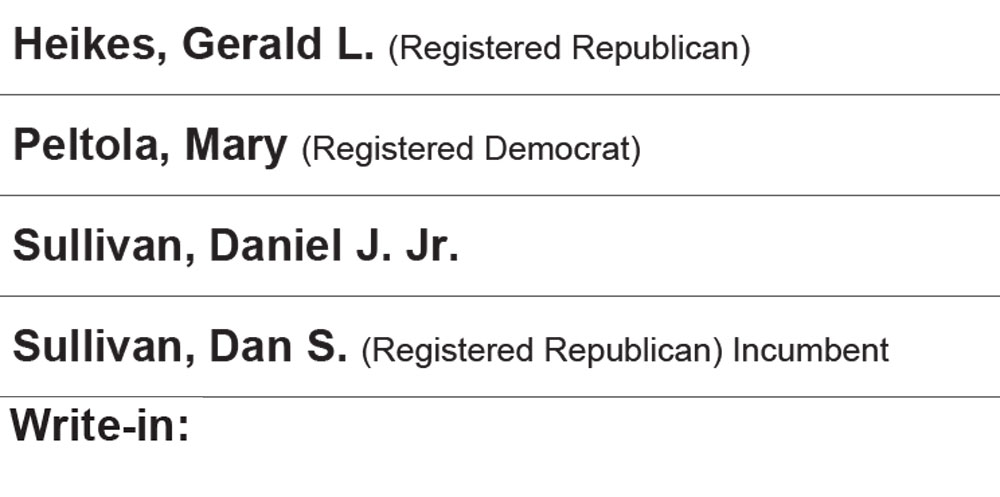
It was, for a while, considered one of those colorful quirks that crop up in the course of an election: the fact that not one but two candidates named Dan Sullivan will appear on the Nov. 3 ballot for U.S. senator from Alaska.
But now the situation seems to be getting more serious. At President Trump's direction, the Justice Department last week sued in federal court to block certification of the election if Sen. Dan S. Sullivan loses, alleging that retired teacher Dan J. Sullivan is a Democratic plant whose purpose is to siphon away votes.
'The Times has found, based on interviews and text messages, along with documents prepared for a potential lawsuit against the campaign, that not only did Ms. Peltola's team work with people trying to recruit Mr. Sullivan to run for Senate, but the effort was much broader,' the paper wrote. 'The group worked to coax other would-be spoilers into the race, to dilute the incumbent's support and help catapult the Democrat to victory.'
In response to the report, Trump called for both Peltola and the 'fake' Dan Sullivan to be removed from the ballot in a post on Truth Social.
Yahoo
The outcome of the legal dispute, if it moves forward, could have enormous national implications. Democrats need to win at least a few Senate races in historically Republican states to secure a majority in the chamber. Polls suggest Alaska is one of their best chances to turn a red seat blue. Given how close other races across the country appear to be, a legal ruling that erases a narrow Peltola victory could be the pivot point that allows the GOP to keep control of the Senate for the last two years of Trump's presidency.
How did this happen, and where do things go from here? Here's everything you need to know to catch up and make sense of the story.
How Alaska wound up with two Dan Sullivans on the ballot
Ballot-stacking — the process of recruiting a spoiler candidate to help your candidate win — isn't unheard of in politics, and the Times says it's 'generally considered legal.'
But it's a lot easier in Alaska than other states because of the unique way elections work there. When Peltola ran for reelection to the U.S. House in 2024, the state GOP backed an effort to help a second Democrat — an inmate who conducted his campaign from a New York prison — remain on the ballot. And during this year's primaries, super PACs aligned with both parties 'flooded the state with ads for fringe candidates' in an attempt to 'dilute support for the mainstream candidates opposed by the groups,' according to an October Alaska Beacon report.
How is any of this possible? The Last Frontier sends the top four primary candidates to the general election regardless of party — then asks voters to rank them on Election Day in order of preference. This means that candidates can claim any party affiliation on the ballot without being vetted by parties themselves. (Dan J. Sullivan initially claimed to be a Republican.) It also means that as ,long as they finish in the top four, primary candidates don't have to earn many votes to secure their very own ballot line on Nov. 3. (Dan J. Sullivan won 4,107).
For months, Republicans have questioned Dan J. Sullivan's intentions and tried to get him tossed off the ballot. In June, the Alaska Supreme Court dismissed their arguments, ruling that neither state law nor the U.S. Constitution provided any legal basis for removing Dan J. Sullivan's name.
How the Senate candidates will appear on Alaska's midterm ballot.
elections.alaska.gov
The more obscure Sullivan has 'maintained that he [is] running in good faith and of his own volition, as a moderate Republican and not a secret Democrat,' as a Times profile put it in August. He said he'd voted in the past for some Alaska Republicans, including Sen. Lisa Murkowski, even though he also 'acknowledged previous donations to Ms. Peltola and a handful of other Democrats,' and said he would prefer Peltola for Senate over the Republican incumbent 'if it was between those two.'
But according to this week's Times report, 'operatives aligned with' the Peltola campaign convinced Dan J. Sullivan to enter the race 'to help Mary.' The report cited as its sources 12 people 'who participated in or were told of the plan' as well as interviews with other would-be recruits and dozens of internal text messages.
For the record, both Peltola's campaign and the Democratic Senatorial Campaign Committee, which directs the party's campaign strategy in Senate races across the country, have denied any 'involvement,' and Dan J. Sullivan did not respond to the Times's repeated requests for comment. One of the Times's main sources — former Peltola campaign manager and longtime aide Elisa Rios, who had been planning to file a wrongful termination lawsuit — also tried to retract her statements to the paper ahead of publication.
The Times story described an elaborate endeavor — which was 'internally called the ballot composition project' — that 'involved secret trips to far-flung Alaskan communities and the appearance of a mysterious Midwestern operative, who traversed the state using a fake name and made his pitch to would-be candidates over beers at brew pubs.' The Times also reported that the 'Peltola campaign's lawyers, as well as senior aides at the Democratic Senatorial Campaign Committee' were 'involved' with the effort.
The Trump administration's lawsuit
Legal battles over the dual Dan Sullivan issue had been confined to state courts until last week. That's when Trump's administration filed its lawsuit aiming to have the certification of the results blocked if Peltola wins a close election that may have been affected by Dan J. Sullivan's presence on the ballot.
'Should Alaska certify any electoral results tainted by the inclusion on the ballot of Daniel J. Sullivan … the State and its officers will fail in its obligation to protect the integrity of its election,' the Department of Justice wrote in its legal filing.
The suit argues that a Democratic victory should be considered invalid if Peltola wins by a margin smaller than the total number of votes that Dan J. Sullivan receives — under the assumption that those votes may have come from confused voters who intended to vote for the incumbent Republican senator instead.
Democrats have asked the courts to dismiss the lawsuit, arguing that the administration lacks 'any statutory or constitutional authority to insert itself' into the state's electoral process. Alaska's state government, which is currently led by Republicans, has also filed to dismiss the administration's lawsuit. On Monday, a federal judge agreed to fast-track consideration of the dispute to potentially allow it to be resolved before Election Day.
Many legal experts say the lawsuit has a slim chance of success. First, it requires a very specific outcome in which Peltola wins by what would likely need to be a very thin margin. Even in that scenario, election law experts say, the appearance of confusion on the part of voters does not create legal grounds for the federal DOJ to have the results rejected.
'I believe that this lawsuit is abusive in its intentions and borders on frivolous in its arguments, and that it is destined for defeat in the courts should it reach the merits,' Walter Olson, a senior fellow at the Cato Institute, a libertarian think tank, told the Alaska Beacon.
Nicholas Stephanopoulos, a Harvard law professor, told the Harvard Gazette that the law the administration is relying on in its lawsuit — the National Voter Registration Act (NVRA) — does not give federal authorities any power to challenge state election procedures.
'The lawsuit has nothing to do with voter registration. There's no allegation that anybody is improperly registered in Alaska; there's no claim that Alaska isn't in compliance with the NVRA's requirements for voter registration,' Stephanopoulos said.
More generally, experts say the lawsuit runs against the Constitution's language granting states the power to run their own elections.
'This is purely a matter of state law, and the administration has absolutely no authority to tell Alaska when or how to certify the results of its Senate election,' David Becker, a former Justice Department attorney who worked on voting rights cases, told Alaska Public Media.
What's next?
The federal judge in Alaska considering Democrats' motion to dismiss the lawsuit issued an order late Wednesday allowing their challenge to move forward. She gave the DOJ until Thursday afternoon to respond.
That likely only matters in an extremely close race, which is not the recent norm in Alaska. The last time Dan S. Sullivan was on the ballot, he defeated his top challenger, independent candidate Al Gross, by 45,000 votes. The most recent Senate race, in 2022, was closer, but the top two finishers were both Republicans.
Things are expected to be much tighter this time around. Peltola has held a consistent lead in the polls since the summer, but her advantage has steadily shrunk in the months leading up to Election Day. The most recent surveys have her ahead by 2 points, well within the margin for Sullivan to win. The Cook Political Report, one of the nation's most respected election forecasters, lists the race as a toss-up. Another well-regarded forecaster, the Center for Politics, categorizes it as 'leans Democrat.'
This article originally appeared on Yahoo News at https://www.yahoo.com/news/politics/article/alaska-democrats-linked-to-secret-effort-to-recruit-2nd-dan-sullivan-to-tip-senate-race-report-200632493.html
Two right-wing provocateurs, James O'Keefe and Cam Higby, are facing election-related charges in Minnesota after posting videos of an undercover stunt intended to expose alleged deficiencies in election security.
Hennepin County Attorney Mary Moriarty said each man faces a count of unlawful voting and identity theft.
'Elections are the bedrock of democracy and their protection is one of our highest priorities,' Moriarty said in a statement. 'Individuals engaging in unlawful conduct related to our elections will be held accountable.'
O'Keefe, a self-proclaimed 'guerilla journalist' infamous for his undercover videos, and Higby, a social media influencer, posted the video at the heart of the charges in August. It shows the two men approaching election judges at multiple voting precincts in Minneapolis wearing burqas, speaking in fake accents, and allegedly misrepresenting their identities, in an effort to expose what O'Keefe and Higby say are gaps in the rules that allow residents to vouch for the identity of other voters.
The video, which remains pinned on Higby's X account, is called 'I Wore Burqa To EXPOSE Election FRAUD In Minneapolis.'
No ballots were cast in the course of their efforts.
Prosecutors said Wednesday that O'Keefe and Higby deceived the election judges by using the identities of real Minnesota voters 'without those voters' knowledge or permission' in violation of state law. Each count carries up to five years in prison and a fine of up to $10,000. Neither man is in custody, according to charging documents.
Tim Evans/AFP via Getty Images - PHOTO: People fill their ballots during the first day of early voting for the midterm elections in Minneapolis, Minnesota, October 16, 2026.
In a statement, O'Keefe called the charges 'weaponized lawfare' and defended his undercover video as journalism protected by the Constitution. He vowed to fight the charges.
'This is not political,' he said. 'It is fundamental. It is about whether citizens still have the right to question their government.'
In a post shared on X, Higby said, 'No laws were broken. They want me in PRISON for exposing election vulnerabilities in their state.' O'Keefe did not immediately respond to a request for comment.
Steve Simon, the state's top election official, said in a statement that 'any attempt to disrupt or deceive our election workers will not be tolerated.'
The charges announced Wednesday in Minnesota are not O'Keefe's first brush with the law. In 2010, O'Keefe pleaded guilty in Louisiana to a misdemeanor charge of entering a federal property under false pretenses after he posed as a telephone repairman to gain access to a U.S. senator's New Orleans office.
This article originally appeared on ABC News at https://abcnews.com/US/2-wing-provocateurs-facing-election-related-charges-minnesota/story?id=137646933
Democrats have signalled a willingness to launch probes into both Donald Trump and Pete Hegseth's handling of the Iran war [Getty Images]
Democrats in the US Congress are already planning how they would use their power if they win a majority in the House or Senate in next week's midterm elections.
Success is by no means guaranteed, even if midterms can sometimes be brutal for the incumbent party that holds the White House.
Control of the chamber, however, would give the party power to issue subpoenas - summons to testify or produce documents - as well as additional funding to launch investigations early next year.
Democrats are weighing whether to investigate senior figures in the Trump administration - and possibly the president himself. Staffers have begun assembling a list of possible investigations and witnesses, according to people familiar with the discussions.
Here are a few potential Democratic targets if the party emerges victorious on 3 November.
1. Trump's family and finances
Democrats have made it clear that lucrative deals brokered by the Trump family's vast business empire will be primary targets of any initial investigations.
'We want to make sure that [American] taxpayer dollars are being used wisely and not being stolen or pocketed because of corruption,' Virginia Democratic Representative Suhas Subramanyam, a member of the House Oversight Committee, told the BBC.
Items under consideration for investigation include ties between the administration and corporate entities - particularly cryptocurrency firms - as well as the international business dealings of the president's son-in-law, Jared Kushner.
Other topics could include the $400m (£301m) aircraft gifted by Qatar to serve as Air Force One and multimillion-dollar defence contracts awarded to firms linked to the Trump family.
'What's shocking to me is not only that this administration, cabinet officials and even the president and his family have been corrupt and self-dealing, but they've been so brazen and open about it,' Subramanyam said.
The White House has repeatedly denied any allegations of wrongdoing.
'President Trump is focused on retaining Republican majorities in Congress and doubling down on the progress he has made to lower costs for families,' White House spokesperson Olivia Wales said.
'Democrats have no agenda to improve the lives of the American people, just plans to obstruct and baselessly target President Trump's commonsense agenda,' she added.
A White House official said the administration is 'always prepared' to respond to oversight requests regardless of who is in Congress.
Democratic lawmakers have vowed to look into Defence Secretary Pete Hegseth's handling of the war with Iran that began in February - including the number of civilian casualties, munitions shortfalls, spending and claims of poorly prepared troops and facilities.
Other topics, according to a source familiar with the discussions, could include boat strikes in the Caribbean that the administration says are aimed at stopping the flow of drugs into the US.
In April, a group of House Democrats filed rare articles of impeachment against Hegseth. They cited the war in Iran and accused him of 'high crimes and misdemeanours'.
Impeachment requires only a simple majority in the House, but conviction - and removal from office - would require a two-thirds vote in the Senate. No cabinet official has ever been removed this way.
Some experts believe that the negative publicity that would come from congressional hearings could ultimately lead to Hegseth being fired or resigning from the position.
'[If] it looks bad for the White House, and it's a drag on their media attention, President Trump might be likely to cut loose those officials, because he doesn't want that bad press,' said David Miller, a political science professor and expert on the presidency at American University in Washington DC. 'In a sense that could be a win for the Democrats.'
Richard Painter, the former chief White House ethics lawyer under George W Bush, told the BBC that the decision to launch the war should come under scrutiny.
'The bigger issue is this: this war was never authorised by the United States Congress, and I don't care who the secretary of defence is,' he said.
'The constitution says that Congress declares war,' he said, and lawmakers should 'haul these folks in' to answer questions.
In a statement, Pentagon Press Secretary Kingsley Wilson defended Hegseth's record, calling him a 'transformative leader' who has 'slashed bureaucracy, unleashed innovation, and delivered for our warfighters'.
'By every measurable metric, the Department of War is better under Secretary Hegseth's leadership than before,' she said, using the administration's preferred name for the defence department.
The aircraft gifted by Qatar to serve as Air Force One is also likely to be the target of Democratic investigations [Getty Images]
3. Immigration and ICE raids
Senior Democrats - including Robert Garcia, the California Democrat tapped to lead the House Oversight Committee should the party take back the chamber - have identified immigration enforcement as a key priority for potential congressional investigations.
These could examine allegations of misconduct by Immigration and Customs Enforcement (ICE) agents during immigration raids across the country.
But these investigations may prove difficult and politically tricky.
In 2024, Trump campaigned on a promise of mass deportations of undocumented migrants - a message that resonated with many of his supporters.
But recent polls suggest many Americans, including those who backed Trump in that election, are uncomfortable with some of the tactics used by ICE in American cities so far this year.
It means Democrats will have to walk a fine line between opposing ICE tactics and appearing to dismiss broader immigration concerns, Painter told the BBC.
4. A third Trump impeachment
Democrats are split on the possibility of attempting to impeach Trump for a third time.
Some, such as Representative Alexandria Ocasio-Cortez, have expressed support for an impeachment, citing what they view as an unauthorised war with Iran and other alleged impeachable offences.
Others have called for a more cautious approach, arguing that any impeachment is unlikely to end in the Senate voting to remove Trump - who has repeatedly denied any wrongdoing - from office.
It is also unclear whether the party could agree on a reason to launch impeachment proceedings.
'I can do whatever I want, if I want,' Trump told reporters in the Oval Office in October, adding that he sees the impeachment efforts in his first term and the later criminal cases brought against him as 'very illegal things'.
James Comer, the Republican chairman of the House Oversight Committee, told the Washington Sun news outlet in June that Democrats were 'one-trick ponies' who were 'going to go after Trump'.
There is no guarantee for Democrats that any potential investigation would end with a meaningful outcome.
But Subramanyam said their efforts would send a message.
'If we do not do something because we are scared of the optics, or we don't think it will be successful, or they stonewall us, that will be bad,' he said. 'Not just for the next two years, but for the next 20 years.'
[BBC]
Follow the twists and turns of Trump's second term with North America correspondent Anthony Zurcher's US Politics Unspun newsletter. Readers in the UK can sign up here. Those outside the UK can sign up here.
This article originally appeared on BBC at https://www.bbc.com/news/articles/cvglwg033027o?xtor=AL-72-%5Bpartner%5D-%5Byahoo.north.america%5D-%5Bheadline%5D-%5Bnews%5D-%5Bbizdev%5D-%5Bisapi%5D
President Donald Trump on Tuesday pulled back regulations on a major global warming pollutant — just days after a satellite discovered a large plume of methane pouring out of oil and gas wells near the Lubbock, Texas, campaign rally where Trump made his announcement.
Governments and the private sector are deploying a wave of new technology to pinpoint methane leaks like never before. But that technological revolution is colliding with political decisions in the U.S. and Europe to weaken regulations that are designed to curb the powerful driver of climate change.
“The methane problem,” Trump said Tuesday night. “I'm officially terminating Biden's expensive and unnecessary methane regulations to save consumers and energy producers $45 billion in costs, unlock vast quantities of Texas natural gas and produce 210 million barrels of oil.”
American and European regulators alike have argued that the methane rules should be ditched or delayed because they threaten to increase the price and availability of energy, even as new technology identifies gas leaks — and bad actors — with remarkable accuracy.
The backtracking could result in more methane emissions as nations around the world are failing to meet their commitments to contain climate change.
“You can't reduce what you don't monitor,” said center-left European Parliament lawmaker Thomas Pellerin-Carlin, who opposes steps to delay the bloc’s rules.
Methane has 80 times the warming impact of carbon dioxide over a 20-year period. Climate scientists say controlling methane, a byproduct of producing oil, gas and coal, along with agriculture and decomposing waste, is the fastest way to arrest rising temperatures.
But the U.S. Environmental Protection Agency has proposed weakening methane standards for oil and gas operators and is poised to eliminate penalties for so-called “super-emitters.” Meanwhile, the European Union is preparing to delay methane rules designed to prioritize energy imports with lower emissions.
The backsliding comes as a wave of new technologies has pinpointed the world’s largest sources of methane, making it easier than ever before to prevent the gas from escaping into the atmosphere. A sweeping study published in the journal Nature found that methane-sensing equipment on satellites detected leaks with 92% to 100% accuracy on clear days, underscoring leaps in progress.
Satellites are not the only improvement. Heat cameras can now spot leaks. Companies like Google are using artificial intelligence tools to map plumes from space. And firms are flying airplanes with a remote sensing technology that uses laser pulses, called LIDAR, to track methane.
“Ten years ago, the tools were not there. You couldn’t detect these things,” said Riley Duren, CEO of the environmental nonprofit Carbon Mapper, which uses satellites and other technologies to detect methane leaks worldwide. “Today we have more tools at our disposal than ever. It’s not a visibility challenge anymore.”
The group’s Tanager-1 satellite spotted methane leaks in a slice of the Texas Permian Basin on Oct. 10. Two days later, a new satellite named Tanager-2, which rode a SpaceX rocket into orbit this month, confirmed the Texas plume.
The bigger test is getting companies to take action.
Carbon Mapper this year has issued 460 notices to companies operating super-emitting sites in 13 U.S. states. It also works with California’s environmental regulator, the California Air Resources Board, on the only U.S. methane enforcement regime that uses satellite technology.
Only about half of the recipients responded, Duren said. When asked why, he said states have differing levels of incentives — or punishments — to fix leaks. Many lack personnel. The absence of national policy doesn’t help.
The story is similar across the world.
The United Nations Environment Programme’s Methane Alert and Response System, which issues alerts from 35 satellites to 24 nations and nine subnational governments, registered a 12% response rate in 2025.
The 141 governments that crafted methane reduction goals as part of the Paris climate agreement have done little to meet their targets: Just 20 countries have outlined steps to slash fossil fuel methane emissions, and only five have submitted quantified targets.
“It’s clear that there’s a gap between what is being committed and what is being implemented,” said Marcelo Mena-Carrasco, CEO of the Global Methane Hub, a philanthropy-backed organization working to reduce emissions. “We know this in a much better way — we know who and which companies are doing so, and so we have all the elements to maintain accountability.”
Except for enforcement regulations.
Shifting geopolitics and a growing focus on securing energy supplies have pushed climate action down many countries’ priority lists. Industry has argued that many methane policies were ill-designed, and there has been pushback to what some companies viewed as a naming and shaming approach when emissions around their operations were identified, said Antoine Halff, who co-founded Kayrros, a firm that tracks methane emissions.
The American Petroleum Institute, which represents U.S. oil and gas producers, praised Trump’s proposed rollback of the Biden-era methane limits.
“We look forward to working with the Trump administration on a more workable approach that supports American energy production, provides greater regulatory certainty and advances continued emissions reductions,” Dustin Meyer, the group’s senior vice president of policy, economics and regulatory affairs, wrote in a statement.
The current energy crisis resulting from the war in Iran has made governments anxious about taking any measures that could push up prices or curtail supply. Even though experts and the European Commission have said that the bloc’s incoming methane rules pose no risks to affordability or energy security, the fossil fuel industry, with the backing of the Trump administration, has seized on these worries to campaign for a delay — successfully.
The Commission earlier this month proposed a one-year delay to rules meant to ensure oil and gas companies monitor and report their emissions. The requirement was supposed to inform a subsequent move toward curbing imports from the most polluting gas fields. The Commission also allowed countries to suspend penalties under the regulation.
Then last week the European Parliament voted for a three-year postponement of the rules, and some EU governments are pushing for national capitals to adopt a similar delay, citing the energy crisis.
Proponents of regulation have pointed out that by patching leaks, companies retain more gas to sell on the market.
'We have independent scientific studies that show there is enough regulation-compliant gas on the market to supply the EU twice over. That means giving in to the lobbying right now is just a gift to the fossil fuel industry,” said German Green lawmaker Jutta Paulus. “After all, the gas that escapes unused is precisely what won’t end up on the market. In other words, we’re actually making the supply even scarcer rather than increasing it.”
Smaller gas producers have long argued that measures to curb methane are costly. In the current environment, even bigger players who put in place measures to address their methane footprint are less interested in pushing forward.
“The impetus toward certification of good methane and responsible gas and so on seems to be fading a bit,” said Halff. “I think this has to do with the extreme uncertainty in the market and concerns about energy security. … I think people are very comfortable pushing this discussion in the background to keep their options open in the future.”
Methane measures haven’t completely halted.
“There are definitely rollbacks in the U.S. In the EU, I would call it more of a delay than a rollback, but politically it is not the momentum that we would like to see. But I do think that in many other countries … we do have more positive success stories,” said Brandon Locke, director for global methane policy at the Clean Air Task Force, a nonprofit.
China, the world’s largest methane producer, has included methane emissions in its latest national climate plan and created standards, rules and measuring and verification systems to curb coal mine methane, its biggest source of emissions.
Japan and South Korea established a transparency initiative that asks liquefied natural gas suppliers to disclose their efforts to monitor and address methane leaks — though it’s based on self-reporting.
And Kazakhstan, one of the world’s super-emitters due to its aging Soviet-era equipment, has dramatically reduced its methane emissions and is creating national rules to monitor them. That program is based on the EPA super-emitter program, which was enabled by advancements that allowed satellites to track performance across wider basins, said Duren, of Carbon Mapper.
Canada’s enhanced methane regulations, which will take effect in 2028, prohibit flaring, put strict limits on venting and call for regular leak detection and repair. But they also allow oil and gas producers to determine how they’ll reduce their emissions, as long as they meet certain standards. The rules are weaker than those that were proposed during the Trudeau administration.
“Where there has been sustained long-term efforts by governments to work with industry to systematically reduce emissions, there has been significant reductions and there's lower emissions,” said Stephane Germain, president of GHGSat Inc., which operates 20 satellites that continuously monitor and orbit the Earth. “I'll point to my own backyard here — British Columbia [and] Alberta — two jurisdictions where we rarely see anything with our satellites.”
Those measures are all occurring at a time when energy demands are growing rapidly, and countries are using more coal and drilling for more oil to meet them.
The U.N.’s latest assessment of the gap between what countries have committed to do on climate and what their policies will actually deliver shows that methane emissions haven’t fallen in the five years since countries pledged to drive them down 30% by 2030.
That pledge, launched by the U.S. and EU, put methane on the map globally and mobilized billions of dollars in investment and a major new push on policy, including in China, said Rick Duke, a former deputy climate envoy at the State Department during the Biden administration.
But the results of all that attention and money have been underwhelming, said Paulus, the German member of the European Parliament who negotiated the methane law.
“We don’t need a Global Methane Pledge if no one's willing to do anything,” she said.
CORRECTION: A previous version of the story misstated the title of Marcelo Mena-Carrasco. He is the CEO of the Global Methane Hub.
This article originally appeared on Politico at https://www.politico.com/news/2026/10/28/methane-trump-climate-oil-gas-01137313
WASHINGTON — President Donald Trump floated nominating Ted Cruz to the Supreme Court for a future vacancy on the nation's high court, joking that the Texas Republican senator's confirmation would earn unanimous Senate support because senators from both parties would like to see him gone.
Trump, who has mentioned Cruz previously for the Supreme Court, suggested the third-term senator again at an Oct. 27 midterm campaign rally in Lubbock, Texas as the president discussed what he might do if he gets to nominate a Supreme Court justice for a fourth time over his two White House terms.
'I said, 'I have an answer to not being able to get it past the Democrats or the Republicans together,'' Trump said, referring to the confirmation fight in the Senate. 'I would pick Ted Cruz to be the next Supreme Court justice, and I wouldn't have to worry about it. I wouldn't have to make a phone call.
'The Democrats will 100% vote for it because they hate the guy and the want to get rid of him,' Trump continued. 'And the Republicans would 100% vote for it because they can't stand him, they would like to get rid of him. So I'd get 100% of the vote, and he would be a Supreme Court justice and he'd do a great job.'
Cruz, who was in attendance at the rally for Texas Republican Senate nominee Ken Paxton, laughed and smiled from his front-row seat as Trump made the pitch.
A conservative firebrand in the Senate, Cruz has repeatedly said he's not interested in serving on the Supreme Court. “I don't want to be a judge,” Cruz told the Houston Chronicle in September.
Trump has openly expressed regret for nominating each of his three Supreme Court picks from his first term ‒ Neil Gorsuch, Brett Kavanaugh and Amy Coney Barrett ‒ after they sided against his administration in a series of high-profile rulings.
Trump called Cruz 'a brilliant guy, brilliant lawyer, brilliant all that.' As solicitor general of Texas from 2008 to 2013, Cruz argued multiple cases before the Supreme Court. After graduating from Harvard Law School, Cruz clerked for then-Chief Justice William Rehnquist.
Cruz, 55, has turned into one of Trump's strongest allies on the Senate after running against Trump for the Republican nomination for president in 2016.
Cruz has also made no secret about his interest in running for president in 2028. Other Trump allies Vice President JD Vance and Secretary of State Marco Rubio are also considered likely contenders to seek the Republican nomination. Were Trump to appoint Cruz to the Supreme Court, however, the field would start to narrow.
It is unclear whether Trump will have an opportunity to nominate a fourth justice to the Supreme Court. Justice Samuel Alito in August said he plans to remain on the bench through at least the next session, batting down speculation the conservative justice could step down to allow Trump to choose his replacement.
This article originally appeared on USA TODAY at https://www.usatoday.com/story/news/politics/2026/10/28/trump-floats-senator-ted-cruz-supreme-court-vacancy/92474646007/
Progressive Twitch streamer Hasan Piker filed a defamation lawsuit against conservative CNN commentator Scott Jennings on Tuesday, accusing him of falsely claiming Piker advocated for lynching Black Americans after airing an edited video of his remarks.
The 38-page lawsuit, filed in federal court in Washington, D.C., centers on an Aug. 11 episode of “The Scott Jennings Show,” in which Jennings shared clips of Piker claiming he had said, “the USA should resume lynchings against Black people.”
Piker, who threatened legal action in August over the claim and shared further context to the clips, alleges Jennings knowingly misrepresented sarcastic comments he made during his livestreams by turning it into an apparent endorsement of racial violence.
“Mr. Jennings did not merely mischaracterize something Mr. Piker said,” the complaint reads. “He took a false, fabricated, and manipulated video of Mr. Piker, added a made-up quotation that Mr. Piker never uttered, and then made accusations that went beyond even what the manipulated footage purported to show.”
During the August broadcast, Jennings warned Black voters to pay close attention before playing the clip, which included an on-screen caption attributing a statement, “Let’s go back to a better time when lynchings were happening,” to Piker.
Jennings later accused Piker of “calling for Black voters to be lynched” and referred to what he called “the Piker plan of returning our country to lynchings.”
The original footage came from an October 2024 Twitch broadcast in which Piker was reacting to a debate between two Black political commentators — one liberal and one conservative. After the conservative participant criticized “woke DAs,” Piker sarcastically suggested the commentator wanted to return to an era of racial discrimination and lynchings, according to the complaint.
“He said, ‘We need more Klansmen, OK? Can we go back to a better time when lynchings were happening?’” Piker said during the stream in reaction to the commentator’s argument.
Piker’s attorneys argue that the edited video removed the words “He said,” along with his laughter and surrounding commentary, to intentionally make it appear as though Piker was expressing his own beliefs rather than mocking someone else’s.
The dispute emerged amid the Michigan Senate race, where the edited video was circulated to criticize progressive Democratic candidate Abdul El-Sayed over his association with Piker.
When Jennings posted the segment on the social platform X, he referred to Piker as El-Sayed’s “best pal and campaign partner,” before accusing him of supporting racial violence.
The post has received roughly 2.5 million views as of Tuesday, according to the lawsuit, and Jennings allegedly refused to retract his statements despite receiving a written demand from Piker’s attorneys on Aug. 31.
Piker’s legal team also says the accusations damaged his reputation and threatened his ability to earn money through streaming, advertising and sponsorships.
Copyright 2026 Nexstar Media, Inc. All rights reserved. This material may not be published, broadcast, rewritten, or redistributed. For the latest news, weather, sports, and streaming video, head to The Hill.This article originally appeared on The Hill at https://thehill.com/regulation/court-battles/6176566-piker-defamation-lawsuit-jennings/
To know more about how we can meet your specific requirements, please drop us a message or mail us at 'contact [at] pegasusinfocorp.com'. Please click here to drop us a message.